

Lyssna på den här podden kostnadsfritt i appen: Ladda ner gratis i App Store
radio.se
Sleeptimer
Spara kanal
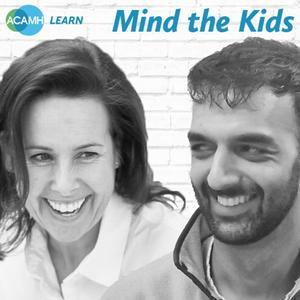
'Mind the Kids': an ACAMH podcast
The Association for Child and Adolescent Mental Health
Senaste avsnittet
422 avsnitt
422: Diagnosed; The Teenage Brain Experience. An 'Inside the Teen Brain' podcast
2026-09-11 | 32 min.Watch the interview on ACAMH Learn at https://bit.ly/Diagnosed-Experience and get a free CPD/CME certificate by registering for a FREE ACAMH Learn account at https://bit.ly/4fF4BBW
In this episode of Inside the Teen Brain, Dr. Jane Gilmour speaks with Rayne Huggins about the experience of being diagnosed with Tourette syndrome. Drawing on personal lived experience, Rayne reflects on what a diagnosis can mean for a young person and explores the pros and cons of receiving one. Together, they consider how a diagnosis can shape not only how a person understands themselves, but also their sense of identity and connection to a wider community. Honest and thought-provoking, the conversation offers a valuable first-hand perspective on living with Tourette syndrome and what diagnosis can come to represent.
Learning Objectives
A. To understand what it means to be diagnosed with tourette syndrome.
B. To explore pros and cons of attaining a diagnosis of tourette syndrome.
C. To explore how this may shape identity and community
Get a free CPD/CME certificate for listening to this podcast by registering for a FREE ACAMH Learn account at https://bit.ly/4fF4BBW
Visit https://www.acamh.org
Facebook and LinkedIn search / ACAMH
Instagram https://www.instagram.com/assoc.camh
Bluesky https://bsky.app/profile/acamh.bsky.social
X https://x.com/acamh421: Poverty, Policy, and Politics. A Mind the Kids podcast
2026-09-09 | 42 min.How does research actually change government policy? In this episode of Mind the Kids, hosts Dr Jane Gilmour (UCL) and Professor Umar Toseeb (University of York) sit down with Baroness Ruth Lister — Emeritus Professor of Social Policy at Loughborough University, Fellow of the British Academy, and a Labour peer in the House of Lords — to unpack how evidence, political will and public appetite combine (or collide) to shape social policy for children living in poverty.
This conversation goes behind the headlines of the UK's child poverty strategy, including the abolition of the two-child benefit limit from April 2026 — a change expected to be the single biggest reduction in child poverty any UK government has delivered at a stroke, after CPAG research linked the policy to roughly 109 children entering poverty every day.
In this episode we cover:
– How the House of Lords scrutinises legislation, and Baroness Lister's role as a backbench "critical friend"
– Why politicians cherry-pick evidence — and when evidence gets overridden by ideology or public appetite
– The real story behind scrapping the two-child benefit limit, and why the benefit cap remains in place despite similar evidence of harm
– Why UK child poverty sits at 27% (down from around 30% following a measurement change) and what's really driving it — frozen benefits, insecure work, and rising housing costs
– The civil service vs. ministers vs. MPs: who academics should really be talking to for policy impact
– Why "child poverty," not "family poverty," was the deliberately chosen framing that built public support
– The power of lived experience in policymaking, including the Changing Realities project and the Timms PIP review
– Interpersonal relationships and community interventions as a positive, low-cost buffer against the harms of poverty
– Why child poverty is a mental health issue — and how squeezed welfare budgets often resurface as pressure on CAMHS and schools
Whether you're a researcher trying to translate evidence into real-world impact, a clinician working with families affected by poverty, or simply want to understand how policy really gets made in Westminster, this episode is essential listening.
Mind the Kids is brought to you by ACAMH (Association for Child and Adolescent Mental Health), translating the latest child and adolescent mental health research into evidence-based conversation.
🔔 Subscribe for more conversations on child development, social policy, and the evidence shaping child and adolescent mental health.
Get a free CPD/CME certificate for listening to this podcast by registering for a FREE ACAMH Learn account at https://bit.ly/4fF4BBW
Visit https://www.acamh.org
Facebook and LinkedIn search / ACAMH
Instagram https://www.instagram.com/assoc.camh
Bluesky https://bsky.app/profile/acamh.bsky.social
X https://x.com/acamh420: ADHD; Risk, Reward and the Teenage Brain. An 'Inside the Teen Brain' podcast.
2026-09-04 | 44 min.Watch the interview on ACAMH Learn at https://bit.ly/ADHD-Teen-Brain and get a free CPD/CME certificate by registering for a FREE ACAMH Learn account at https://bit.ly/4fF4BBW
In this conversation, Dr. Jane Gilmour and Professor Susan Young explore what it means to understand ADHD through the lens of the teenage brain. Adolescence is a period of rapid change, marked by increased risk-taking, emotional intensity, and a drive for novelty—characteristics that are also central to ADHD. She considers what happens when these developmental processes intersect, and how to distinguish between what is typical, what is neurodivergent, and what may be misunderstood.
Professor Young reflects on how ADHD presents and evolves across adolescence and into young adulthood, challenging dominant narratives, including debates around overdiagnosis and late identification. She also examines more complex and often overlooked issues in practice, such as the relationship between ADHD and trauma, risk-taking behaviours including substance use, and pathways into the criminal justice system.
The discussion moves beyond theory to consider what works in practice, including how clinicians can better engage young people in evidence-based interventions such as CBT, and what practical changes can make a meaningful difference. Overall, this conversation brings together research, clinical experience, and real-world challenges to better understand and support neurodivergent young people.
Learning Objectives
A. To understand ADHD through the lens of adolescent development
B. To recognise areas of debate and uncertainty in ADHD (e.g. diagnosis, trauma, risk)
C. To identify practical approaches to supporting and engaging young people
Get a free CPD/CME certificate for listening to this podcast by registering for a FREE ACAMH Learn account at https://bit.ly/4fF4BBW
Visit https://www.acamh.org
Facebook and LinkedIn search / ACAMH
Instagram https://www.instagram.com/assoc.camh
Bluesky https://bsky.app/profile/acamh.bsky.social
X https://x.com/acamh419: How smart is a phone ban? A Mind the Kids podcast
2026-09-02 | 54 min.Listen to the pod and take this 30 second survey to help us improve https://york.qualtrics.com/jfe/form/SV_5gNKGPMVAHdQS6a
How smart is a phone ban, really? With the UK's under-16s social media ban confirmed for spring 2027 and mobile phones now expected to be banned from every English school day by default, this episode of Mind the Kids tackles one of the biggest parenting and policy debates of our time: what does the evidence actually say about smartphones, social media and children's mental health?
Hosts Dr. Jane Gilmour (Honorary consultant clinical psychologist and child development programme director at UCL) and Professor Umar Toseeb (Professor of Psychology at the University of York) are joined by Professor Lisa Henderson from the University of York, author of two Child and Adolescent Mental Health Journal papers: "Digital Safeguarding Incidents in Schools With and Without Smartphone Policies" and "Innovations in Practice: A Pilot Randomised Trial on Smartphone and Social Media Abstinence."
In this episode we unpack:
– What the UK's social media ban for under-16s actually means for platforms like TikTok, Instagram, YouTube and Snapchat
– Why comparing the UK ban to Australia's isn't a fair like-for-like comparison
– New pilot RCT data on smartphone and social media abstinence, sleep quality and wellbeing in adolescents
– What happens to digital safeguarding incident reporting when schools introduce phone policies
– The "lost generation" risk — teens already embedded in social platforms navigating an abrupt policy shift
– Why parental phone habits predict children's smartphone use
– The "Goldilocks" amount of social media time, and why moderate use isn't the enemy
If you work in education, child psychology, safeguarding, or you're a parent trying to make sense of the smartphone ban headlines, this conversation goes well beyond the soundbites.
Mind the Kids is brought to you by ACAMH (Association for Child and Adolescent Mental Health), translating the latest child and adolescent mental health research into evidence-based conversation.
🔔 Subscribe for new episodes on child development, adolescent mental health, and the research shaping child psychology practice.
Read the JCPP paper ‘Digital safeguarding incidents in schools with and without smartphone policies: a cross-sectional study in England'
https://doi.org/10.1111/camh.70079
Emma Sullivan, Rob Dallison, Pete Montgomery, Lisa Henderson
First published: 11 March 2026
Get a free CPD/CME certificate for listening to this podcast by registering for a FREE ACAMH Learn account at https://bit.ly/4fF4BBW
Don't miss our webinar debate 'Regulating Social Media Use in Children and Young People – Are bans justified?' This 1.5-hour online debate brings together leading experts to examine whether age-based social media bans are an appropriate policy response to concerns about children and young people’s mental health.
Visit https://www.acamh.org
Facebook and LinkedIn search / ACAMH
Instagram https://www.instagram.com/assoc.camh
Bluesky https://bsky.app/profile/acamh.bsky.social
X https://x.com/acamh418: Bullied; the teenage brain under threat. An 'Inside the Teen Brain' podcast
2026-08-28 | 39 min.Watch the interview on ACAMH Learn at https://bit.ly/Teen-Brain-Bullied and get a free CPD/CME certificate by registering for a FREE ACAMH Learn account at https://bit.ly/4fF4BBW
In this interview, Dr. Jane Gilmour talks to Mairéad Foody, Assistant Lecturer in Psychology at University of Galway, Ireland.
Bullying is a harmful experience for many children and young people, affecting their mental health, relationships, and wellbeing into adulthood.
This talk will help listeners understand what bullying and cyberbullying are, and why they happens. It will discuss the impact of victimisation on children and adolescents and it will outline the different roles involved in bullying/cyberbullying situations (not just bullies and victims, but also bystanders and defenders).
Overall, the goal is to provide a clearer picture of how complex bullying and cyberbullying really are and why effective responses must consider individuals, peer groups, families, and schools together.
Learning Objectives
A. To understand what bullying and cyberbullying are and their prevalence.
B. To outline the impact of bullying and cyberbullying on children and adolescents.
C. To describe anti-bullying interventions.
Visit https://www.acamh.org
Facebook and LinkedIn search / ACAMH
Instagram https://www.instagram.com/assoc.camh
Bluesky https://bsky.app/profile/acamh.bsky.social
X https://x.com/acamh
Fler podcasts i Hälsa och motion
 On Purpose with Jay ShettyHälsa och motion, Mental hälsa, Näringsliv
 RondenHälsa och motion, Life Science, Medicin, Vetenskap
 ÅngestpoddenHälsa och motion, Mental hälsa
 HälsorevolutionenHälsa och motion, Vetenskap
 Huberman LabHälsa och motion, Life Science, Vetenskap
 ViktmedicinpoddenHälsa och motion, Utbildning
 Johannes Hansen PodcastHälsa och motion, Mental hälsa, Självhjälp, Utbildning
 TRÄNINGSKLUBBENHälsa och motion, Självhjälp, Sport, Utbildning
 Bara En Till... - Om beroende & medberoendeHälsa och motion, Mental hälsa, Relationer, Samhälle och kultur, Självhjälp, Utbildning
 Spring med Petra & COHälsa och motion, Löpning, Sport
Trendiga poddar i Hälsa och motion
 Spicy ASMR RoleplayHälsa och motion, Relationer, Samhälle och kultur, Sexualitet
 Arnold's Pump ClubHälsa och motion, Motion
 EXPANDED Podcast by To Be Magnetic™Alternativ hälsa, Andlighet, Hälsa och motion, Religion och spiritualitet, Självhjälp, Utbildning
 The Human Upgrade: Biohacking for Longevity & PerformanceHälsa och motion, Självhjälp, Utbildning, Vetenskap
- NEJM This WeekHälsa och motion, Medicin
 TÄNK DIG HÄLSOSAM MED LINA LAGOMHälsa och motion
 Livet efter digHälsa och motion, Mental hälsa
 Känsliga RummetHälsa och motion
 KlimaktetHälsa och motion, Samhälle och kultur, Utbildning
 The One You Feed | Personal Growth, Emotional Resilience & PurposeBuddhism, Hälsa och motion, Mental hälsa, Religion och spiritualitet, Självhjälp, Utbildning
 Erotic StoriesDrama, Hälsa och motion, Sexualitet, Skönlitteratur
 Office Hours with Arthur BrooksHälsa och motion, Mental hälsa
 Lifespan with Dr. David SinclairHälsa och motion
 Vi har knipit klart!Hälsa och motion
 Ett litet mellanrumHälsa och motion, Mental hälsa, Självhjälp, Utbildning
 The Psychology of your 20sHälsa och motion, Mental hälsa, Relationer, Samhälle och kultur, Samhällsvetenskap, Självhjälp, Utbildning, Vetenskap
Om 'Mind the Kids': an ACAMH podcast
These podcasts are an invaluable resource for anyone interested in child and adolescent mental health. They bridge the gap between rigorous research and practical application, featuring expert discussions on mental health. Each episode highlights cutting-edge studies offering insights into findings, and implications for practice.
The series caters to clinicians, researchers, and those interested in mental health. Available on major platforms like Spotify and Apple Podcasts, it’s an accessible way to stay informed about advancements in the field.
Visit our website for a host of free evidence-based mental health resources.
Podcast-webbplatsLyssna på 'Mind the Kids': an ACAMH podcast, On Purpose with Jay Shetty och många andra poddar från världens alla hörn med radio.se-appen
Hämta den kostnadsfria radio.se-appen
- Bokmärk stationer och podcasts
- Strömma via Wi-Fi eller Bluetooth
- Stödjer Carplay & Android Auto
- Många andra appfunktioner
Hämta den kostnadsfria radio.se-appen
- Bokmärk stationer och podcasts
- Strömma via Wi-Fi eller Bluetooth
- Stödjer Carplay & Android Auto
- Många andra appfunktioner

'Mind the Kids': an ACAMH podcast
Skanna koden,
ladda ner appen,
börja lyssna.
ladda ner appen,
börja lyssna.
 Sverige