
Lyssna på den här podden kostnadsfritt i appen: Ladda ner gratis i App Store
radio.se
Sleeptimer
Spara kanal
439 avsnitt
The Nutrition Scientist: You've Been LIED To About Calories, Fasting & Losing Weight | Stacy Sims
2026-11-18 | 1 h 5 min.Dr. Stacy Sims has spent over two decades studying what most sports science left out: women. In this conversation, she explains why fasting until noon can leave you with more visceral fat, why "calories in, calories out" doesn't hold up, and why many active women are under-fueled without knowing it. She also shares, for what may be the first time on a podcast, the story of the postpartum depression that put her in a psych unit.
In this episode, Louisa sits down with the exercise physiologist, nutrition scientist, and author of ROAR and Next Level. Stacy explains the difference between time-restricted eating and fasting, and why women should eat within 30 to 45 minutes of waking to separate cortisol from their appetite hormones. She explains why training fasted makes hard sessions feel harder for women, what to eat before a morning workout, and why active women need 1.6 to 1.8 grams of protein per kilo.
They break down why the calorie equation came from steam engines, why so many women lose fat when they start eating more, and how GLP-1s and a high step count can quietly leave you under-fueled. Stacy explains why women lose power faster than men with age, why high-intensity training improves women's mitochondria more than Zone 2, and how to ease an older parent into harder training. Louisa shares a twin study linking leg power to brain volume.
Stacy tells the story of being told she couldn't join the military "because you're a girl," and of having her lab results thrown out because they didn't account for her menstrual cycle. She talks about bias in science, the online hate her daughter saw, why most women don't need ice baths, and why sweat tests are mostly marketing. Finally, she explains how an SSRI made her postpartum depression worse, and how a low dose of a different medication, together with creatine, helped her recover.
🤝 Sponsor The Neuro Experience:
https://neuroathletics.substack.com/p/sponsor-tne/
Thank you to our sponsors:
Nuropod: Extra 20% off through November 29 https://nuropod.com/neuro
Timeline (Mitopure): https://timeline.com/neuro
Rho Nutrition: https://rhonutrition.com - Use code NEURO for 20% off
Reduce your risk of Alzheimer's with my science-backed protocol for women 30+:
https://go.neuroathletics.com.au/youtube-sales-page
Subscribe to The Neuro Experience for evidence-based conversations at the intersection of brain science, longevity, and performance.
Chapters:
00:00 Intro: Why Women Are Not Small Men
00:43 The Fasting Debate: Why Women Should Eat Breakfast
03:40 Cortisol, Appetite Hormones, and the Female Circadian Rhythm
05:41 Low Energy Availability: The Hidden Crisis in Active Women
07:18 Training Fasted: Why Your Brain Needs Fuel
08:40 Protein Coffee and Pre-Workout Nutrition Strategies
12:13 Farmer's Carries and Building Shoulders That Last
13:43 Strength Training vs Resistance Training: What's the Difference?
18:12 Calories In, Calories Out Is Broken: The Real Story
20:47 How Much Should Women Really Eat? The 2,800 Calorie Day
24:27 GLP-1s, Walking, and Hidden Energy Deficits
27:31 Protein Requirements: 1.6-1.8 Grams Per Kilo for Active Women
28:34 Power: The Physical Quality Women Lose Fastest
33:25 Leg Power and Brain Volume: The Twin Study That Changes Everything
36:31 Lactate, Zone 5 Training, and Why Your Mom Needs High Intensity
37:42 Getting Older Women to Train Hard: Overcoming Fear
43:28 The Origin Story: When Being a Girl Became a Limitation
45:23 Thrown Out Data: How Women's Results Get Discarded
47:09 Gender Bias in Research, Publishing, and VC Funding
50:08 Dealing with Hate: PTSD from Online Attacks
53:14 Cold Plunging for Women: The Temperature That Actually Works
55:56 Sauna, Infrared Heat, and Why Women Tolerate Heat Better
56:39 Dehydration and Cognitive Decline: The 1.36% Threshold
57:32 Electrolytes: Marketing vs Science
1:00:42 Postpartum Depression, Psych Wards, and Finding Creatine
1:03:27 Creatine for Women: Depression, Sleep, and Brain Health
1:04:40 Dosing Creatine: 3-10 Grams Split Morning and Night
Follow Dr Sims here:
https://www.drstacysims.com
https://www.youtube.com/channel/UCPD55VPa1ZWx1a_nzWC2VJA
https://www.instagram.com/drstacysims/
I'm Louisa Nicola — clinical neurophysiologist, Alzheimer's prevention specialist, and founder of Neuro Athletics. My mission is to translate cutting-edge neuroscience into actionable strategies for cognitive longevity, peak performance, and brain disease prevention. If you're committed to optimizing your brain, reducing Alzheimer's risk, and staying mentally sharp for life, you're in the right place.
Stay sharp. Stay informed. Join thousands who subscribe to the Neuro Athletics Newsletter → https://bit.ly/3ewI5P0
Instagram: https://www.instagram.com/louisanicola_
Twitter: https://twitter.com/louisanicola_
#WomensHealth #Fasting #CreatineSleep Expert: This Changes Everything Doctors Know About Your Sleep
2026-10-27 | 1 h 17 min.Dr. Michael Breus has spent his entire career as "The Sleep Doctor," and six months ago he found out he stops breathing 26 times an hour in his sleep. In this conversation, he explains why almost everyone wakes up at 3 AM, why most people take far too much melatonin, and what your dreams are actually doing for your brain.
In this episode, Louisa sits down with the clinical psychologist and author of The Power of When to go through the biology of sleep. He explains the body temperature shift that wakes every human between 1 and 3 AM, and he shares his exact protocol for getting back to sleep: don't get up to pee, don't look at the clock, and use 4-7-8 breathing until your heart rate drops. He also covers the 3-2-1 rule, sleep during perimenopause, and why your wake-up time matters more than your bedtime.
Then he gets into sleep apnea, starting with his own diagnosis. He explains why a neck over 17.5 inches means an 83% chance of having it, what it does to the heart and brain, and why women have been diagnosed against male criteria for decades. He walks through CPAP, oral appliances, at-home sleep studies, and a new pill in development.
They also get into supplements. He explains that melatonin is a hormone that interacts with every birth control and every SSRI, that store-bought doses are often several times what the research supports, and why he's against giving it to children. He breaks down magnesium, "kitchen sink" sleep gummies, valerian, and his banana tea recipe, and also covers jet lag, naps, sleep trackers, separate bedrooms, and the link between sex and sleep.
Finally, dreams. Dr. Breus explains why dreams are "emotional metabolism," how image rehearsal therapy can change a recurring nightmare, how to remember your dreams, and why acting out your dreams can be an early warning sign of Parkinson's.
🤝 Sponsor The Neuro Experience:
https://neuroathletics.substack.com/p/sponsor-tne/
Reduce your risk of Alzheimer's with my science-backed protocol for women 30+:
https://go.neuroathletics.com.au/youtube-sales-page
Subscribe to The Neuro Experience for evidence-based conversations at the intersection of brain science, longevity, and performance.
Chapters:
00:00 3AM wake-ups, sleep apnea, melatonin and dreams
00:43 Why everyone wakes up at 3AM
02:55 How to fall back asleep in the middle of the night
06:13 4-7-8 breathing
08:18 Prostate, menopause and night waking
12:53 Why wake-up time matters more than bedtime
14:52 Snoring and sleep apnea
15:55 Dr. Breus' own sleep apnea diagnosis
18:20 Why sleep is the currency of attention
20:29 The patient story that made him a sleep doctor
23:05 What sleep apnea does to your heart and brain
25:27 Why women with sleep apnea get misdiagnosed
27:56 How CPAP actually works
31:40 How to get a sleep study
34:03 How to beat jet lag
40:05 Should you nap?
43:02 What deep sleep and REM sleep actually do
46:03 Can you trust your sleep tracker?
48:35 A new pill for sleep apnea
49:05 Magnesium and sleep supplements
51:39 The truth about melatonin
53:43 Why kids shouldn't take melatonin
56:18 Breaking down a popular sleep gummy
59:26 Sleep masks and sleeping in separate beds
1:02:56 Sex and sleep
1:04:53 Dr. Breus' banana tea sleep cocktail
1:07:15 What dreams actually mean
1:12:48 How to remember your dreams
1:15:57 REM sleep behavior disorder and Parkinson's
Thank you to our sponsors:
Nuropod: 5% off https://nuropod.com/neuro
Timeline (Mitopure): https://timeline.com/NEURO - Get 20% off when you subscribe and save
Solius: https://solius.com/neuro - Use code NEURO for 10% off
I'm Louisa Nicola — clinical neurophysiologist, Alzheimer's prevention specialist, and founder of Neuro Athletics. My mission is to translate cutting-edge neuroscience into actionable strategies for cognitive longevity, peak performance, and brain disease prevention. If you're committed to optimizing your brain, reducing Alzheimer's risk, and staying mentally sharp for life, you're in the right place.
Stay sharp. Stay informed. Join thousands who subscribe to the Neuro Athletics Newsletter → https://bit.ly/3ewI5P0
Instagram: https://www.instagram.com/louisanicola_
Twitter: https://twitter.com/louisanicola_Top Flow Researcher: How to Get 5 Days of Work Done in 1 Day | Steven Kotler
2026-09-29 | 1 h 35 min.Steven Kotler has spent 30 years studying the state that makes people 500% more productive, and he has a problem with the book everyone on your feed is quoting. In this conversation he explains what flow actually is, how to train it, and why "The Body Keeps the Score" got trauma wrong.
In this episode, Louisa sits down with the flow researcher and Flow Research Collective founder to go through the neurobiology underneath peak performance. He walks through the six characteristics psychologists use to define flow, the McKinsey study that found top leaders were 500% more productive in it, the DARPA experiment that cut skill acquisition time in half, and the data from 15,000 people who went through his eight-week training: a 73.4% increase in time spent in flow, anxiety down 41%, motivation up 40%.
Then he gets practical. Flow follows focus, so he lays out the triggers that drive it: why you should give your hardest task 90 to 110 minutes first thing, why task focus beats ego focus, why darkness amplifies divergent thinking and light amplifies convergent, and why the average leader now has 17 incoming channels instead of three. He explains why the two biggest blockers aren't neurological at all, why there are no "three things you can do Monday morning," and why grit should be the last tool you reach for, not the first.
They also get into AI, where Kotler is working on a paper arguing these products need warning stickers. He explains why working with AI produces a fake group flow, complete with the dopamine and the fast feedback loops, but missing the one thing real group flow gives you: someone to error-correct you.
Finally, the argument that will annoy your Instagram feed. Kotler's paper with Karl Friston, "The Body Does Not Keep the Score," makes the case that trauma isn't stored in your hips or your jaw. It's a prediction problem, not a storage problem. He explains the research showing roughly 70% of people return to baseline within 18 months, why a victim mindset locks you out of flow entirely, why body-based therapies sometimes work for reasons that have nothing to do with stored trauma, and what he learned about grief from running an animal sanctuary.
🤝 Sponsor The Neuro Experience:
https://open.substack.com/pub/neuroathletics/p/sponsor-tne
Reduce your risk of Alzheimer's with my science-backed protocol for women 30+:
https://go.neuroathletics.com.au/youtube-sales-page
Subscribe to The Neuro Experience for evidence-based conversations at the intersection of brain science, longevity, and performance.
Chapters:
00:00 Flow, AI, trauma and peak performance
01:03 What flow actually is
05:35 The six characteristics of flow
09:09 How long a flow state can last
11:29 Can you train yourself to enter flow?
15:57 Expertise, learning and pattern recognition
21:22 Why modern life makes flow harder
23:01 The triggers that create flow
26:01 Building a 90-minute focus window
30:07 Batch communication and protect your attention
35:12 Why Kotler dedicated his life to flow
38:46 How AI creates fake group flow
48:04 Sex differences, hormones and flow
53:59 Does the body keep the score?
59:41 Trauma as a prediction problem
1:11:20 Why peak performance has no shortcuts
1:13:20 Flow, grief and creating new memories
1:20:57 Measuring group flow
1:23:43 Does prayer help you enter flow?
1:27:30 First principles for getting into flow
Thank you to our sponsors:
Nuropod: 5% off https://nuropod.com/neuro
Timeline (Mitopure): https://timeline.com/NEURO - Get 20% off when you subscribe and save
Solius: https://solius.com - Use code NEURO for 10% off
I'm Louisa Nicola — clinical neurophysiologist, Alzheimer's prevention specialist, and founder of Neuro Athletics. My mission is to translate cutting-edge neuroscience into actionable strategies for cognitive longevity, peak performance, and brain disease prevention. If you're committed to optimizing your brain, reducing Alzheimer's risk, and staying mentally sharp for life, you're in the right place. Stay sharp. Stay informed. Join thousands who subscribe to the Neuro Athletics
Newsletter → https://bit.ly/3ewI5P0
Instagram: https://www.instagram.com/louisanicola_/
Twitter: https://twitter.com/louisanicola_Surgeon Exposes How Health Insurance Tricks You Into Overpaying | Dr. Elisabeth Potter
2026-09-22 | 57 min.When Dr. Elisabeth Potter scrubbed out of surgery to take a call from UnitedHealthcare, she had no idea it would change her life. The patient in question was already under anesthesia, mid-mastectomy, and the insurer wanted her to justify an overnight hospital stay on the spot. They denied it anyway, and the patient was billed $100,000. Potter's video about that moment was watched by more than 26 million people, and it was followed by a cease-and-desist letter from a powerful Washington, D.C. law firm demanding she retract everything.
In this episode, Louisa sits down with the Austin-based reconstructive microsurgeon to unpack what really happens between a diagnosis and the care patients actually receive. She explains why she believes denial is a strategy, how prior authorizations, peer-to-peer calls, and appeals work in practice, and why roughly 1 in 5 in-network recommendations on some Affordable Care Act plans are rejected. She shares why a procedure she has performed for 14 years is still labelled "experimental," the year-long fight to get one young woman a mastectomy, and why a single billing code values a muscle-sacrificing TRAM flap the same as the muscle-sparing DIEP flap she specializes in.
You'll also hear what DIEP flap reconstruction involves and why she prefers it to implants for many patients, the personal cost of standing up to an insurance giant, including draining her savings and risking bankruptcy to keep her practice open, and the advocacy that followed, from a rally in Washington, D.C. to the Speak Free Act and the Patients Deserve Price Tags Act. She reveals how one hospital quoted a patient $240,000 for a surgery she could perform for $17,000, and lays out exactly what patients can do right now: record every appointment, demand an itemized estimate, and appeal everything.
Finally, she delivers the truth she feels morally obligated to tell every American: insurance isn't what you think it is, and you don't actually need it to get good care.
🤝 Sponsor The Neuro Experience:
https://open.substack.com/pub/neuroathletics/p/sponsor-tne
Reduce your risk of Alzheimer's with my science-backed protocol for women 30+:
https://go.neuroathletics.com.au/youtube-sales-page
Subscribe to The Neuro Experience for evidence-based conversations at the intersection of brain science, longevity, and performance.
Thank you to our sponsors:
Rho Nutrition: https://rhonutrition.com - Use code NEURO for 20% off liposomal glutathione
Timeline (Mitopure): https://timeline.com/NEURO - Get 20% off when you subscribe and save
I'm Louisa Nicola — clinical neurophysiologist, Alzheimer's prevention specialist, and founder of Neuro Athletics.
My mission is to translate cutting-edge neuroscience into actionable strategies for cognitive longevity, peak performance, and brain disease prevention. If you're committed to optimizing your brain, reducing Alzheimer's risk, and staying mentally sharp for life, you're in the right place.
Stay sharp. Stay informed. Join thousands who subscribe to the Neuro Athletics Newsletter → https://bit.ly/3ewI5P0
Instagram: https://www.instagram.com/louisanicola_/
Twitter: https://twitter.com/louisaNo, AI Isn’t Rotting Your Brain, It’s Actully Far Worse | Jim Kwik
2026-08-12 | 1 h 4 min.AI can write the essay, calculate the answer, summarize the book, and solve the problem before you have really had to think. Jim Kwik's concern is not just cognitive offloading. It's cognitive surrender. After 34 years teaching people how to learn, remember, read, and focus, he believes the real risk of AI is that technology starts doing so much of the mental work that we stop building the abilities we need most.
In this episode, Louisa sits down with Jim to unpack what happens when we outsource memory, judgment, creativity, and critical thinking. He explains why learning requires effort, why the brain follows a "use it or lose it" principle, and what research comparing students using ChatGPT, search engines, or no assistance suggests about cognitive engagement and recall. They also explore cognitive reserve, metacognition, attention, reading, sleep, and why doing difficult things may be one of the best ways to protect the brain.
Jim also shares the brain injury that shaped his life, the period when severe sleep apnea left him sleeping around 90 minutes a night, and the habits he now uses to protect his cognition. You'll hear why he says "mind before media," why reading is exercise for the brain, and how to use AI as augmented intelligence without giving up your own. The goal isn't to reject technology. It's to stay the pilot of your brain, not the passenger.
🤝 Sponsor The Neuro Experience:
https://open.substack.com/pub/neuroat...
Reduce your risk of Alzheimer's with my science-backed protocol for women 30+:
https://go.neuroathletics.com.au/yout...
Subscribe to The Neuro Experience for evidence-based conversations at the intersection of brain science, longevity, and performance.
TOPICS DISCUSSED
00:00 Are We Raising the Dumbest Generation Because of AI?
01:06 What Happens When Technology Thinks for Us?
02:03 The ChatGPT Study: What Happened to Memory and Recall
03:00 Cognitive Offloading vs Cognitive Surrender
05:01 Brain Rot, Doomscrolling, and the Attention Crisis
08:19 Why Reading Is Training for Your Brain
09:30 Neuroplasticity and the London Taxi Driver Study
12:20 “Natural Intelligence Is Becoming Artificial”
13:06 Why Asking Good Questions Matters More Than Ever
16:50 How Weak Critical Thinking Makes You Easier to Manipulate
19:31 Cognitive Reserve: Your Brain’s Savings Account
22:52 Cognitive Antifragility: Why the Brain Needs Challenge
25:34 How to Stay Human in the Age of AI
29:15 Metacognition: Thinking About Your Thinking
34:46 Why High Performers Protect Their Attention
40:46 Jim Kwik’s Childhood Brain Injury
45:27 Five Years of Severe Sleep Apnea
49:48 What You Do First Thing in the Morning Matters
52:47 Jim’s 3 + 3 Morning Exercise
54:00 “Mind Before Media”
57:22 Where AI Is Going Next
58:31 Artificial Intelligence vs Augmented Intelligence
60:19 The AI Risk Nobody Talks About: Losing Purpose
62:15 Be the Pilot of Your Brain, Not the Passenger
Thank you to our sponsors:
Kinsyn: https://KINSYN.com/neuro and promo code neuro for 20% off
Qualia Life: https://qualialife.com/NEURO - Get 50% off
Jones Road Beauty: https://jonesroadbeauty.com - Use code LOUISA to get a free gift with your first purchase
Timeline (Mitopure): https://timeline.com/NEURO
I’m Louisa Nicola - clinical neurophysiologist - Alzheimer’s prevention specialist - founder of Neuro Athletics.
My mission is to translate cutting-edge neuroscience into actionable strategies for cognitive longevity, peak performance, and brain disease prevention.
If you're committed to optimizing your brain- reducing Alzheimer’s risk - and staying mentally sharp for life, you’re in the right place.
Stay sharp. Stay informed. Join thousands who subscribe to the Neuro Athletics Newsletter → https://bit.ly/3ewI5P0
Instagram: https://www.instagram.com/louisanicola_/
Twitter : https://twitter.com/louisanicola_
Learn more about your ad choices. Visit megaphone.fm/adchoices
Fler podcasts i Hälsa och motion


Trendiga poddar i Hälsa och motion








Om The Neuro Experience
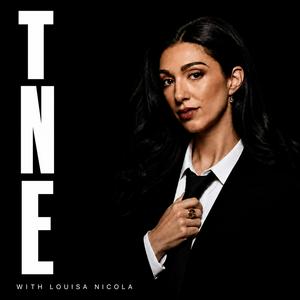
The Neuro Experience. Conversations with the greatest minds in Brain Science.
Podcast-webbplatsLyssna på The Neuro Experience, Lättsamt med KP och många andra poddar från världens alla hörn med radio.se-appen
Hämta den kostnadsfria radio.se-appen
- Bokmärk stationer och podcasts
- Strömma via Wi-Fi eller Bluetooth
- Stödjer Carplay & Android Auto
- Många andra appfunktioner

The Neuro Experience: Poddsändningar i Familj
 Sverige

