

Lyssna på den här podden kostnadsfritt i appen: Ladda ner gratis i App Store
radio.se
Sleeptimer
Spara kanal
149 avsnitt
Episode 12.6 What The Lindsay Clancy Case Reveals About Perinatal Mental Health Care
2026-09-17 | 58 min.Tara Chettiar joins as we talk through what the Lindsay Clancy case surfaces about postpartum mood disorders and why the public often misunderstands psychiatric illness when it gets filtered through legal arguments and internet certainty. We focus on practical clinical signals, especially sleep disruption, and what real safety planning and system reform should look like for postpartum families.
• why we avoid diagnosing a public case and instead look for system lessons
• how legal “insanity” clashes with the clinical spectrum of impairment
• why med lists get misread and what SSRI activation can signal
• baby blues versus postpartum depression and postpartum anxiety over time
• postpartum OCD intrusive thoughts versus psychosis and delusions
• sleep deprivation as the clearest danger sign and how it presents
• what families can do in an acute postpartum mental health crisis
• first line outpatient medication basics for OB GYN care
• why postpartum psychosis needs emergency level triage
• mother baby units and why the US has so few
• what a postpartum mental health safety plan includes, including guns and pills
• better screening in pregnancy, EPDS versus PHQ-9, and why anxiety matters
• workforce gaps and why OBs, family medicine, pediatrics, and ER teams need training
• Resources: Postpartum Support International at 1-800-944-4773 and text help, the National Maternal Mental Health Hotline at 833-TLC-Mama (852-6262), and 988
Be sure to check out thinking about obgyn.com for more information.
And be sure to follow us on Instagram.
0:00 Welcome And Trigger Warning
1:30 Meet Tara And Her Work
7:10 Why The Clancy Case Matters
11:55 Legal Binary Versus Clinical Reality
12:50 Med Lists And Public Misreads
14:50 SSRI Insomnia And Bipolar Red Flags
18:15 Baby Blues Through Psychosis Spectrum
24:00 Intrusive Thoughts Versus Psychosis
28:13 Sleep Loss And Family Warning Signs
30:45 First Line Meds And Titration
34:55 ER Triage And Postpartum Advocacy
39:05 Mother Baby Units And Step Down Care
42:30 Safety Plans Means And Support
45:35 Screening Tools EPDS Over PHQ9
48:05 Workforce Gaps And Training Fixes
49:55 Policy Social Support And Paid Leave
52:40 Hotlines Resources And Closing Thoughts
Follow us on Instagram @thinkingaboutobgyn.Episode 12.5 Payment Reform and More
2026-09-03 | 1 h 6 min.We move from a Dolly Parton story to the very real ways policy, training, and clinical guidance shape what patients can access and what clinicians can safely provide. We break down the end of global OB billing, the risks of vaccine schedule “tweaks,” and why surgical convenience can quietly drive worse care.
• rural maternity deserts and why reimbursement must cover facility costs
• content warnings and protecting our own mental health while learning from high-profile perinatal cases
• the shift from global maternity fees to E/M problem-based prenatal visits
• work RVUs, delivery billing and why correct coding matters
• measles deaths, herd immunity and why splitting MMR increases missed protection
• robotic surgery dominance, laparoscopic deskilling and training priorities
• ACOG opportunistic salpingectomy guidance for ovarian cancer prevention
• practical techniques to complete salpingectomy during vaginal hysterectomy
• listener question on urinary retention and pudendal nerve injury myths
0:00 Welcome And A Dolly Parton Story
6:07 Perinatal Mental Health And Content Warnings
8:20 OB Billing Shifts From Global To E/M
15:17 Measles Deaths And The MMR Split
20:05 Robotic Dominance And Laparoscopy Deskilling
31:41 ACOG Salpingectomy Guidance And Ovarian Cancer
40:53 Vaginal Hysterectomy Tube Removal Techniques
53:10 Urinary Retention And Pudendal Nerve Myths
1:06:22 Final Takeaways And Where To Follow
Thanks for listening be sure to check out thinkingaboutobyn.com for more information and be sure to follow us on Instagram
Follow us on Instagram @thinkingaboutobgyn.Episode 12.4 Cesarean Delivery And Obesity
2026-08-19 | 59 min.JJ Cox joins us as we talk through what actually changes when we perform cesarean delivery in patients with morbid obesity, from incision planning to anesthesia risk to the wound that has to heal at home. We share practical tips, review key trials on negative pressure dressings and antibiotics, and focus on decisions that protect both safe delivery and lower wound complications.
• panniculus anatomy driving incision choice more than BMI
• using ultrasound to find the uterus when landmarks mislead
• paniculus retraction treated as an anesthesia maneuver
• distance and geometry limiting exposure and delivery technique
• planning the wound’s postoperative “home” before making the cut
• negative pressure wound therapy evidence including the 2020 JAMA trial and skin blistering risk
• skin glue vs standard dressings as competing narratives with limited data
• closing deep subcutaneous space in layers to reduce dead space
• avoiding staples and favoring subcuticular suture based on available evidence
• antibiotic prophylaxis realities including azithromycin dose questions and shortage workarounds
• extended postoperative antibiotics data shift when azithromycin is already used
• OR contamination habits including Yankauer discipline and glove-changing debate
• calling for help early and building a short pre-op plan to prevent downstream problems
Be sure to check out thinking about obgyn.com for more information. And be sure to follow us on Instagram.
0:00 Welcome And Guest Introduction
2:55 Why These C-Sections Are Higher Risk
7:00 Picking The Incision With Ultrasound
14:25 Panniculus Retraction Is Anesthesia Critical
17:35 Delivery Tips When Distance Is The Enemy
19:55 Think About The Wound Before Cutting
24:20 Negative Pressure Dressings What Trials Show
34:45 Subcutaneous Closure Sutures Beat Shortcuts
38:55 Antibiotics Dosing Azithromycin Reality Check
45:55 Contamination Control Yankauer And Gloves
52:10 Assistance Planning And Hemorrhage Limits
55:30 Meta-Analysis Takeaways And Closing
Follow us on Instagram @thinkingaboutobgyn.Episode 12.3 Conception timing, tips for obese laparoscopy, and more!
2026-08-05 | 59 min.We challenge a few stubborn pieces of OB-GYN “common sense” and ask what the data actually supports, from trying to conceive after miscarriage to how we start and adjust ovulation induction. Then we shift into practical laparoscopy tips for obese patients and end with a sober look at how evidence quality shapes care, from magnesium sulfate debates to the rise in pregnancy-associated overdose deaths.
• why waiting a full cycle after first-trimester miscarriage lacks evidence for better outcomes
• why routine progestin withdrawal bleeds before letrozole or clomiphene can be unnecessary and even harmful
• how stair-stepping ovulation induction dosing can shorten time to ovulation
• four operating room tips for minimally invasive surgery in morbid obesity, including port geometry and Trendelenburg dry runs
• what a recent D&E fetal demise paper suggests about DIC and hemorrhage risk beyond 28 days
• why retrospective birth registry studies can mislead when randomized trial data exist
• how Medicaid timing findings highlight confounding rather than causation
• a clever low-port approach to perforated IUD removal using a transabdominal hysteroscope
• why overdose deaths are rising faster in pregnant and postpartum people and what fentanyl changes
Be sure to check out thinking about obgyn.com for more information and be sure to follow us on Instagram.
0:00 Welcome And What We’re Reading
0:29 The Myth Of Waiting After Miscarriage
1:08 Skip The Provera Withdrawal Bleed
7:49 Data On Conceiving Sooner
13:52 Laparoscopy Setup For Obese Patients
25:07 D&E After Second Trimester Demise
28:39 Magnesium Sulfate And Study Quality
39:06 Medicaid Timing And Confounding
44:57 Single Port Perforated IUD Removal
49:33 Overdose As Leading Pregnancy Associated Death
57:57 Book Shout Out And Closing
Follow us on Instagram @thinkingaboutobgyn.Episode 12.2 Cuff Dehiscence and Classic Papers
2026-07-23 | 59 min.Howard Herrell and Stuart Winkler question long-standing OB-GYN habits that feel “routine” but do not add value, then replace them with evidence and practical decision-making. We move from hysterectomy follow-up and cuff dehiscence management to the data behind cesarean sutures, endometrial cancer evaluation in postmenopausal bleeding, and the ongoing shift to HPV-based cervical cancer screening.
• why routine 6 to 8 week vaginal cuff exams after hysterectomy may not prevent or predict dehiscence
• how telehealth post-op care can improve access while keeping symptom-driven safety nets
• four tips for evaluating and managing vaginal cuff dehiscence, including when laparoscopy matters
• what Ethicon discontinuing chromic and plain gut could mean for cesarean technique choices
• how the CORONIS trial informs chromic vs Vicryl decisions and why transfusion risk is part of the conversation
• where the 4 mm endometrial stripe rule came from and why it can fail in real-world care
• why persistent postmenopausal bleeding still warrants endometrial biopsy despite reassuring ultrasound
• how race, tumor subtype, and fibroids affect endometrial cancer detection and counseling
• the arc from Pap smear cytology to HPV DNA testing, vaccines, and primary HPV screening
• why self-collected HPV testing may raise screening uptake for patients avoiding speculum exams
Be sure to check out thinking about obgyn.com for more information, and be sure to follow us on Instagram.
0:00 Welcome And Today’s Game Plan
0:35 Rethinking The Six-Week Pelvic Exam
13:25 Four Practical Tips For Cuff Dehiscence
24:42 Chromic Gut Is Disappearing
35:40 CORONIS Trial And Cesarean Sutures
42:22 Postmenopausal Bleeding And The 4 mm Rule
53:12 HPV Testing Takes Over Screening
Follow us on Instagram @thinkingaboutobgyn.
Fler podcasts i Hälsa och motion
 PsykologernaHälsa och motion, Mental hälsa
 Paus - guidade meditationerHälsa och motion, Mental hälsa
 PsykologsnackHälsa och motion, Mental hälsa, Självhjälp, Utbildning
 Huberman LabHälsa och motion, Life Science, Vetenskap
 Så in i SjälenHälsa och motion, Religion och spiritualitet, Självhjälp, Utbildning
 4Health med Anna SparreAlternativ hälsa, Hälsa och motion, Life Science, Näringslära, Vetenskap
 Berätta alltid det härHälsa och motion, Mental hälsa, Relationer, Samhälle och kultur, Självhjälp, Utbildning
 TRÄNINGSKLUBBENHälsa och motion, Självhjälp, Sport, Utbildning
 Johannes Hansen PodcastHälsa och motion, Mental hälsa, Självhjälp, Utbildning
 Lättsamt med KPHälsa och motion
Trendiga poddar i Hälsa och motion
 Boring Books for Bedtime Readings to Help You SleepBöcker, Hälsa och motion, Konst, Mental hälsa
- NEJM This WeekHälsa och motion, Medicin
 VasahistorierHälsa och motion, Motion
 Forskning för LivetHälsa och motion
 Adults Only Audio PornHälsa och motion, Relationer, Samhälle och kultur, Sexualitet
 Är jag sjuk?Hälsa och motion, Medicin, Mental hälsa
 The Dr Louise Newson PodcastHälsa och motion, Medicin
 Dr. Berg’s Healthy Keto and Intermittent Fasting PodcastHälsa och motion
 Känsliga RummetHälsa och motion
 Porn ReactionsFritid, Hälsa och motion, Sexualitet
 Monkey mindsetAlternativ hälsa, Hälsa och motion
 The Cure for Chronic Pain with Nicole Sachs, LCSWAlternativ hälsa, Andlighet, Hälsa och motion, Religion och spiritualitet
 D-VELO-P cycling training podcastHälsa och motion, Motion
 Allt annat än kärlek är lögnHälsa och motion, Mental hälsa
 The Dom Sub Living BDSM and Kink PodcastHälsa och motion, Relationer, Samhälle och kultur, Sexualitet, Självhjälp, Utbildning
 This Jungian Life PodcastHälsa och motion, Mental hälsa
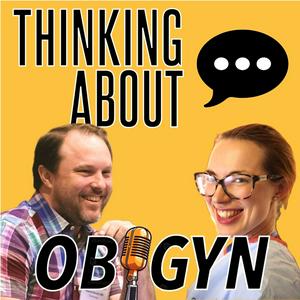
Om Thinking About Ob/Gyn
A fresh and evidence-based perspective of all things related to obstetrics and gynecology. Follow us on Instagram @thinkingaboutobgyn or visit thinkingaboutobgyn.com for show notes and more.
Podcast-webbplatsLyssna på Thinking About Ob/Gyn, Psykologerna och många andra poddar från världens alla hörn med radio.se-appen
Hämta den kostnadsfria radio.se-appen
- Bokmärk stationer och podcasts
- Strömma via Wi-Fi eller Bluetooth
- Stödjer Carplay & Android Auto
- Många andra appfunktioner
Hämta den kostnadsfria radio.se-appen
- Bokmärk stationer och podcasts
- Strömma via Wi-Fi eller Bluetooth
- Stödjer Carplay & Android Auto
- Många andra appfunktioner

Thinking About Ob/Gyn
Skanna koden,
ladda ner appen,
börja lyssna.
ladda ner appen,
börja lyssna.
 Sverige