PoddsändningarHistoriaThat Shakespeare Life

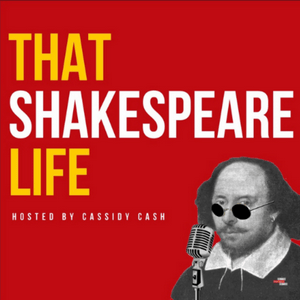
That Shakespeare Life

Cassidy Cash
That Shakespeare Life
Senaste avsnittet

442 avsnitt

  • That Shakespeare Life

    Elaborate Masque Costumes in Shakespeare's England

    2026-07-06 | 34 min.
    Elaborate theatrical performances in Shakespeare's lifetime presented before the reigning monarch were known as court masques. 
    These intricate and complex stories were presented in grand fashion, sparing no expense on costumes, props, and special effects. The most famous masque has to be that of Robert Dudley who hired actual performers from the Comedia del Arte in Italy to perform amazing feats of light, sound, and performance in an effort to propose marriage to the Queen of England. 
    While it makes sense that Dudley would go out of his way to be over the top in his endeavors, the other masques taking place in Shakespeare's lifetime were no less sensational. 
    From Ben Jonson to Inigo Jones and the decorated halls of Whitehall Palace, masques of any stripe were the creme del creme of performances. For this reason, their costumes were not only breathlessly expensive, but they often pushed the boundaries of what was acceptable to wear in public, and included fabric, accessories, design, and presentation that showcased art and story as primary. In many ways, court masque costume and clothing were the high fashion world of Shakespeare's England. 
    This week, our guest, Sarah Jane Downing, fashion historian and author of Fashion in Shakespeare's England, takes us back to the 16-17th century court masques under Elizabeth I and James I to take an up close look at the outfits, the scandals, and the expensive price tag that went along with costuming the most opulent nights of entertainment in all of early modern England.
  • That Shakespeare Life

    17th Century English Spangles Found at Jamestown, Virginia

    2026-06-29 | 27 min.
    In Shakespeare's play, A Midsummer Night's Dream, Puck has a line that says "And now they never meet in grove or green, By fountain clear, or spangled starlight sheen..." In Taming of the Shrew, Petruchio uses this term again saying, "What stars do spangle heaven with such beauty..." In a similar description again from Midsummer, Lysander says "Fair Helena, who more engilds the night Than all you fiery oes and eyes of light."

    If you're not familiar with Engilding the night, that's a word that means "to make bright…often referring to a golden light." It's been around since the 15th century, but what all of these references have in common is they are talking about making something shiny, and in Shakespeare's England the best way to make something look like it glittered was to attach what's called a "spangle" or an "Oe" spelled "oe." Essentially, these were early modern sequins.
    Some surviving examples of 17th century spangles were discovered in Jamestown, Virginia, and are housed inside the collections at Jamestown Rediscovery, which jointly manages Historic Jamestowne alongside the National Park Service. One of the curators involved in that project, Janene Johnston, is here with us today to explain how spangles worked, the history of the ones they found in Virginia, and what the surviving artifacts reveal about how spangles were used in Shakespeare's lifetime.
  • That Shakespeare Life

    Dark Renaissance and The Death of Christopher Marlowe

    2026-06-22 | 46 min.
    Christopher Marlowe is one of the most fascinating—and mysterious—figures of Shakespeare's lifetime. A university-educated playwright at a time when that alone set him apart, Marlowe rose quickly through London's theater world, dazzling audiences with bold language, ambitious characters, and stories that pushed the boundaries of what the stage could do. 
    But Marlowe's life wasn't confined to poetry and playhouses. Evidence suggests he was also moving in far more dangerous circles—working as a government agent in the shadowy world of Elizabethan espionage, where loyalty, religion, and politics were matters of life and death. 
    And then, just as suddenly as he rose to fame, his life came to a violent end—killed in a Deptford lodging house under circumstances that remain deeply suspicious. Officially, it was a dispute over a bill. But for a man entangled in secrets, intrigue, and power, that explanation has never quite been wholly satisfying, nor completely accepted.  
    Today, we're diving deep into the underworld to look inside the extraordinary life and abrupt death of Christopher Marlowe—from the university halls of Cambridge to the murky underworld of espionage, and onto the stages that helped shape the future of English drama. 
    Our guest is Stephen Greenblatt, author of Dark Renaissance a book that portrays Marlowe as the father of Renaissance theater and as innovative as he was intriguing. Stephen's work brings together history, literature, and the hidden forces that shaped the Renaissance world Marlowe inhabited, and we're delighted to have him be our guide this week as we step into the brilliant, dangerous, and ultimately tragic life of Christopher Marlowe.
  • That Shakespeare Life

    How was Midsummer and St. John's Day Celebrated in Elizabethan England?

    2026-06-15 | 28 min.
    In Shakespeare's England, the middle of summer was a time of celebration. While the summer season begins at May Day, the longest day of the year, from June 23 into the 24th, was celebrated as the holiday of Midsummer, and Christianized as St. John's Eve and St. John's Day. It was the longest day of the year, and for the life of William Shakespeare, this holiday was marked with celebrations of feasting, dancing, and bonfires. Shakespeare himself immortalizes the spirit of the festivities in Twelfth Night when Olivia says "Why, this is very midsummer madness." Here today to help us unpack what Midsummer celebrations would have been like in the 16-17th century England, as well as to explain for us how seemingly heathen celebration to celebrate the summer solstice lined up with the celebration of the venerable St. John, is our guest and historian, Bill Petro.
  • That Shakespeare Life

    Doublets, French Hose, and Plunging 16th Century Necklines

    2026-06-08 | 35 min.
    Shakespeare is famous for his costume changes in his plays, including characters that swap genders and seemingly fool the world as their true identity simply by a change of clothes. Since Shakespeare's playing companies were all male, and still manage to portray some of the most powerful women characters ever created on the stage, we have to think there was indeed great power in costume.
    What was it about women's clothes versus men's designs that made them instantly recognizable on stage for the Elizabethan era? During this time, women were seeing their fashions change rapidly in the design and function of everything from bum rolls to chin clouts, and even the acceptable necklines of this period.
    Of course, men were seeing similar transitions in their fashions, with the French introducing English men to the famous poofy shorts that Shakespeare is so famous for wearing. The clothes, along with the sumptuary laws of this period, landed men and women on the wrong side of the law when it came to what they chose to get dressed in each morning.
    Here today to help us unpack the world of clothing and the laws that regulated them, along with how Shakespeare was able to portray all levels of society on stage without getting into legal trouble, is our guest, and author of the book Fashion in the Time of William Shakewsspeare, SarahJane Downing.
Fler podcasts i Historia
Om That Shakespeare Life
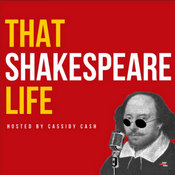
Hosted by Cassidy Cash, That Shakespeare Life takes you behind the curtain and into the real life of William Shakespeare.
Podcast-webbplats

Lyssna på That Shakespeare Life, World War II with Tom Hanks och många andra poddar från världens alla hörn med radio.se-appen

Hämta den kostnadsfria radio.se-appen

  • Bokmärk stationer och podcasts
  • Strömma via Wi-Fi eller Bluetooth
  • Stödjer Carplay & Android Auto
  • Många andra appfunktioner
Sociala nätverk
v8.11.2| © 2007-2026 radio.de GmbH
Generated: 7/13/2026 - 3:41:21 AM