Lyssna på den här podden kostnadsfritt i appen: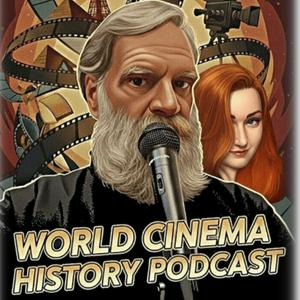 Ladda ner gratis i App Store
radio.se
Sleeptimer
Spara kanal
98 avsnitt
WCH Pod: "Breathless" (1960) vs "Nouvelle Vague" (2025)
2026-1-14 | 1 h 4 min.In the first installment of our Road to Godard series, co-hosts Eric Trommater, Erin Brown, and Jennifer Trujillo dive into the 1959 production that changed everything. We’re putting Jean-Luc Godard’s revolutionary Breathless (À bout de souffle) side-by-side with Richard Linklater’s 2025 film, Nouvelle Vague.
While its place in the history of cinema is undeniable, Eric and Erin find themselves largely unimpressed by the film itself. We explore the chaotic energy of the original Paris shoot and the legendary personalities involved—from Jean Seberg and Jean-Paul Belmondo to the critics-turned-directors of Cahiers du Cinéma.
In this episode:
* Historical Weight vs. Personal Taste: Why Eric and Erin aren't fans of the film, despite its massive influence.
* The Seberg Paradox: We discuss why a film leaning on sexist tropes became a sensation among women and female critics like Pauline Kael in 1960.
* The 1959 Production: Jump cuts, stolen scenes, and a revolution on the streets of Paris.
* Linklater’s Nouvelle Vague (2025): A look at the meta-cinematic portrayal of Truffaut, Godard, and the icons of the era.
* Why Breathless remains the definitive—if polarizing—starting point for our Road to Godard series. A sneak peek at future episodes on "La Grande Illusion"(1937), "Children of Paradise"(1945), "Orpheus" (1950), and Godard's own "Weekend" (1967).
CONNECT WITH US
YouTube: https://youtube.com/@worldcinehist?si=z8Yay0W0I-6APEZz
Apple Podcasts: https://podcasts.apple.com/us/podcast/world-cinema-history/id1744483892
Spotify: https://open.spotify.com/show/4YkCJSJvngtDMhey0CNsWj?si=i143kCA8RQKhQauUICLrmA
X (Twitter): @etrommater
SUPPORT THE SHOW: JOIN THE DVD EXTRAS CLUB
Join here: https://ko-fi.com/worldcinemahistory
(Recurring monthly payments of any amount make a huge difference!)
MUSIC & CLIPS
Music:
Fallen Petals, Shady Business, and Dark Conspiracy via https://www.fesliyanstudios.com/royalty-free-music
Space Ambience by Alexander Nakarada: https://youtu.be/sB6jXSr7_wQ?si=DXoxw4XMpnVwDVz8
Nouth Jazz by B. White (1920): https://youtu.be/aM5z0XLRdXc?si=utq9OwLLKLqMRWoZ
Featured Clips:
Eurotrash: How to watch a Godard Film: https://youtu.be/7xSNuGp2Gxs?si=X6THVHfbOakKfc15
Godard on Classic Film Editing: https://youtube.com/shorts/76f6iIpRPco?si=xuyqkhwLvB6kG9Gx
Road to Godard Series: Episode 1 (1959)"Tokyo Story" (1953): A Quiet Avalanche
2026-1-09 | 1 h 21 min."Isn't life disappointing?"
"Yes, nothing but disappointment."
Thunderstorms descended as Erin Brown, Eric Trommater, Sila Blume, and Jennifer Trujillo gathered to discuss Yasujirō Ozu’s seminal 1953 film, Tokyo Story. As the conclusion to our series on Aging and Mortality in 1950s Cinema, the weather seemed determined to participate; our noise-proofing wasn't quite up to the task of keeping the storm at bay.
In a way, the low rumble of the rain provided the perfect atmosphere to discuss a film widely considered one of the high points of cinema history. We explore Ozu’s unique visual style and the quiet, inevitable disappointments that define the relationships between the generations.
In this episode, we reference clips from:
Sakura, Japanese Folk Song: https://youtu.be/AK51LblcEOw?si=KlO76cPH6K6Um6C1
Lindsay Anderson on Tokyo Story: https://youtu.be/7pss-7_5Xh0?si=Ox1KlVJPXQS2Do6T
Martin Scorsese on Ozu and The Stop Watch: https://youtube.com/shorts/bWRtc63FXM4?si=5ZH4rBx56Vra7GV7
Getting the shot with Yuharu Atsuta: https://youtu.be/g0_iThToEzk?si=g1e8JQNKUFKpnAfp
Connect With Us:
YouTube: https://youtube.com/@worldcinehist?si=z8Yay0W0I-6APEZz
Apple Podcasts: https://podcasts.apple.com/us/podcast/world-cinema-history/id1744483892
Spotify: https://open.spotify.com/show/4YkCJSJvngtDMhey0CNsWj?si=i143kCA8RQKhQauUICLrmA
X (Twitter): @etrommater
Join the World Cinema History DVD Extras Club
Support the show and get closer to the booth! Benefits include:
Bonus Episodes
Attending Live Recordings
Our Love and Appreciation
Future exclusive perks we haven't thought of, yet
Having your name mispronounced on the podcast (our sincerest apologies in advance)
Join here: https://ko-fi.com/worldcinemahistory
(Recurring monthly payments of any amount make a huge difference!)Bonus: Remembering Rob Reiner and the La Monte Afterparty
2026-1-03 | 13 min.In this special bonus installment, we reflect on a filmmaker who defined the American cinematic landscape for decades. We also circle back to the studio for a final word on our recent guest.
The Panel
Jennifer Trujillo, Sila Blume, Eric Trommater, and Erin Brown.
Remembering Rob Reiner (March 6, 1947 – December 14, 2025)
The panel gathers to remember the life and legacy of Rob Reiner. Following his passing this past December, we take a moment to look at his run of films:
This Is Spinal Tap (1984)
Stand by Me (1986)
The Princess Bride (1987)
When Harry Met Sally… (1989)
Misery (1990)
A Few Good Men (1992)
Additionally, we host a debate on the origins of the mockumentary form, questioning if Peter Watkins' The War Game (1966) should be considered the true first of its kind.
The La Monte Afterparty
To close out the episode, we briefly recap the final insights from Christine La Monte after she left the studio. We share the post-script thoughts and industry reflections that surfaced once the formal mics were cut, rounding out our time with her before we return to our main series.
Upcoming Schedule
Next: Tokyo Story (1953) — Ozu and the geometry of aging
Following: Nouvelle Vague (2025) — Linklater’s look at the birth of the New Wave
Road to Godard 1: Grand Illusion (1937) — Renoir’s foundational work
Road to Godard 2: Children of Paradise (1945) — Carné and the theater of life
Road to Godard 3: Orpheus (1950) — Cocteau’s poetic underworld
Road to Godard 4: Weekend (1967) — The end of cinema
Check us out on YouTube: https://youtube.com/@worldcinehist?si=z8Yay0W0I-6APEZz
on Apple Podcasts: https://podcasts.apple.com/us/podcast/world-cinema-history/id1744483892
or Spotify: https://open.spotify.com/show/4YkCJSJvngtDMhey0CNsWj?si=i143kCA8RQKhQauUICLrmA
or follow us on X (The Artist Formerly Known as Twitter): @etrommater
Consider joining the World Cinema History DVD Extras Club.
Benefits include:
* Bonus Episodes
* Attending Live Recordings of the Show
* Our Love and Appreciation
* Whatever Else We Think of in The Future
* Having your name mispronounced on the podcast (sorry in advance)
To join just go to https://ko-fi.com/worldcinemahistory
and make a recurring monthly payment for any amount.Christine La Monte interview | Viva Verdi! & Turandot
2025-12-31 | 1 h 16 min.Producer Christine La Monte joins the show to discuss her Oscar-shortlisted film Viva Verdi! and Ai Weiwei’s Turandot. We talk about the residents of Casa Verdi and the bridge between opera and cinema history.
Host: Eric Trommater
Panel: Erin Brown, Sila Blume, Jennifer Trujillo
Special Guest: My cousin, Jordan Best (Vocals, "O mio babbino caro" by Puccini) https://www.bestsoprano.com/
Links & Info:
Listen to "Sweet Dreams of Joy": https://youtu.be/dpAOquDGcUs?si=gli5b6F6hq8FFKfP
Next week: Ozu’s Tokyo Story
Films recommended by Christine Le Monte
The Lady in Number 6: Music Saved My Life, an Academy Award-winning 2013 documentary-short film directed, written and produced by Malcolm Clarke about the oldest living Holocaust survivor.
The Age of Champions, a 2011 documentary about The Senior Olympics.
Kokuho from 2025, this year's Japanese entry for the Best Foreign Film Oscar.
Check us out on YouTube https://youtube.com/@worldcinehist?si=z8Yay0W0I-6APEZz
on Apple Podcasts: https://podcasts.apple.com/us/podcast/world-cinema-history/id1744483892
or Spotify: https://open.spotify.com/show/4YkCJSJvngtDMhey0CNsWj?si=i143kCA8RQKhQauUICLrmA
or follow us on X (The Artist Formerly Known as Twitter): @etrommater
Consider joining the World Cinema History DVD Extras Club.
Benefits include:
* Bonus Episodes
* Attending Live Recordings of the Show
* Our Love and Appreciation
* Whatever Else We Think of in The Future
* Having your name mispronounced on the podcast (sorry in advance) To join just go to https://ko-fi.com/worldcinemahistory
and make a recurring monthly payment for any amount.
In this episode, the panel sits down with writer and producer Christine La Monte to discuss her work on Viva Verdi! and Ai Weiwei’s Turandot. Even for those who don't follow opera, this conversation is a deep dive into the "third act" of life and the preservation of artistic legacy.
[00:03:08] The Producer’s Role: Christine explains her journey from major studios to independent projects, serving as the bridge that ensures a director's vision is faithfully translated to the screen.
[00:18:27] Viva Verdi!: The heart of the discussion is a retirement home in Milan built by Giuseppe Verdi for musicians.
[00:20:40] A Living Liturgy: We explore a place where the elderly masters and young students share a common language of music, proving that art provides a shared recognition that sustains us through old age.
[00:34:04] Ai Weiwei’s Turandot: We also look at how activist artist Ai Weiwei used Puccini’s final work to comment on modern authoritarianism.
[00:40:04] Art as Witness: A raw look at how art functions as a public witness to history, even under the pressure of a global pandemic.
[01:13:26] Looking Ahead: The panel concludes by previewing the end of the current series with Ozu’s Tokyo Story before beginning the Road to Godard, featuring Grand Illusion ('37), Children of Paradise ('45), Orpheus ('50), and Weekend ('67).Umberto D (1952): Pathos, Pensions, and the Goodest Boy
2025-12-20 | 1 h 8 min.This week on World Cinema History, we continue our series on Aging and Mortality in 1950s Cinema. Having explored the bureaucratic cages of Kurosawa’s Ikiru and the cold Swedish apathy of Bergman’s Wild Strawberries, we now arrive in the blistering, post-war economic hangover of Vittorio De Sica’s 1952 film, Umberto D.
Host Eric Trommater is joined by Erin Brown, Sila Blume, and Italianophile Audra Angelique to dissect a film that was so honest about Italian poverty it was publicly accused of "slandering Italy" by the government.
In this episode, we discuss:
The World’s Most Synchronized Dog: Why Flike is the true star of the film (and why he’s such a good boy).
The 18,000 Lire Problem: We break down Umberto’s debt—roughly $340 in today’s money—and why such a "small" sum was a catastrophic, life-ending figure for a pensioner.
The Irony of Neo-Realism: How a movement dedicated to "truth" was built on a foundation of noisily dubbed studio dialogue and non-professional actors.
The Great Debate: Eric offers a pointed rebuttal to Erin’s preference for this film over China is Near, arguing that while Umberto D. leaves us paralyzed by outrage, Bellocchio’s satire provides a Brechtian "false happy ending" that allows us to process the hypocrisy of the political center.
From Realism to Satire: Finding the seeds of Commedia all’italiana in the film’s darkest moments—from professional beggars to Flike holding the hat in his mouth.
Join us as we explore the "poetry of the ordinary" and the political minefield that defined one of the most influential eras in film history.
Sound Credits
Opening Audio: Courtesy of Martin Scorsese’s introduction to Umberto D. on Turner Classic Movies (TCM).
Musical Theme: Canto di Lavoro composed by Alessandro Cicognini.
Classical Selections: * Vivaldi, Concerto for Viola d'amore in A Minor, RV 397.
Rossini, La Gazza Ladra (The Thieving Magpie) Overture.
Next Week: We conclude our series with Yasujirō Ozu’s Tokyo Story.
Check us out on YouTube: https://youtube.com/@worldcinehist?si=z8Yay0W0I-6APEZz
on Apple Podcasts: https://podcasts.apple.com/us/podcast/world-cinema-history/id1744483892
or Spotify: https://open.spotify.com/show/4YkCJSJvngtDMhey0CNsWj?si=i143kCA8RQKhQauUICLrmA
or follow us on X (The Artist Formerly Known as Twitter): @etrommater
Consider joining the World Cinema History DVD Extras Club.
Benefits include:
* Bonus Episodes
* Attending Live Recordings of the Show
* Our Love and Appreciation
* Whatever Else We Think of in The Future
* Having your name mispronounced on the podcast (sorry in advance)
To join just go to https://ko-fi.com/worldcinemahistory
and make a recurring monthly payment for any amount.
Fler podcasts i Konst
 Skilda världarKonst, Mode och skönhet
 Yada YadaKonst, Mode och skönhet
 FörlagspoddenKonst, Nyheter, Samhälle och kultur, Böcker, Affärsnyheter, Personliga dagböcker
 Edward Bloms smörgåsbord (gratisfeeden)Konst, Komedi, Historia, Mat
 This is 40!Konst
 Poeter och analfabeters bokklubbKonst, Böcker
 In your FaceKonst, Mode och skönhet
 Stök & StilKonst, Samhälle och kultur, Mode och skönhet
 Sanning & konsekvensKonst, Nyheter, Samhälle och kultur, Underhållningsnyheter, Mode och skönhet, Relationer
 Forum med Saga och MyrnaKonst, Böcker
Trendiga poddar i Konst
 Perronger & Prång PodcastKonst, Historia, Musik, Musikintervjuer
 FörfattarhörnanKonst, Utbildning, Samhälle och kultur, Böcker
 SkrivcirkelnKonst
 On the callsheetKonst, Näringsliv, Samhälle och kultur, Karriär, Mode och skönhet, Personliga dagböcker
 Podcast – Cory Doctorow's craphound.comKonst, Böcker
 Inklings Book ClubKonst, Böcker
 Literature and HistoryKonst, Historia, Böcker
 Style-ishKonst, Mode och skönhet
 Udda TingKonst
 Fashion & Founders The PodcastKonst, Näringsliv, Teknologi, Entreprenörskap, Mode och skönhet
 Efter RättenKonst, TV och film, Efterprogram, Mat
 Etthundra döda författareKonst, Böcker
 Kvinnor och RumKonst, Samhälle och kultur, Design
 Vin för RookiesKonst, Mat
 Fashion RoadkillKonst, Nyheter, Design, Underhållningsnyheter, Mode och skönhet
 A brush with...Konst, Visuell konst
 Axess BoksamtalKonst, Vetenskap, Samhälle och kultur, Böcker
 Wrapup | رپاپKonst, Historia, Böcker
 HudvårdsdjungelnKonst, Vetenskap, Mode och skönhet
 LäsarpoddenKonst, Religion och spiritualitet, Böcker, Kristendom
 Alice & Bianca - Har du sagt A får du säga BKonst, Komedi, TV och film, Mode och skönhet
 BoktimmenKonst, Böcker
 Harry PoddenKonst, Komedi, TV och film, Böcker, Filmrecensioner
 HemtrevligtKonst, Fritid, Design, Hus och trädgård
 Drömmarnas poddKonst, Hälsa och motion, Mental hälsa
 Případ HolečkoviKonst
 BokhandlerskanKonst, Samhälle och kultur, Böcker
 Recept tack!?Konst, Komedi, Mat
 Mark & Jonas poddKonst, Komedi, Samhälle och kultur, Dans och teater
 Twenty Thousand HertzKonst, Musik, Design, Musikkommentarer
Om World Cinema History
The movies of Europe, Asia, Africa, Australia, New Zealand, Latin and South America (and an occasional North American movie we like) discussed by a panel of (mostly) American wankers. Season One focuses on cinema of The UK.
Help us stay Advertising Free by giving a one-time tip or by joining the World Cinema History DVD Extras Club.
Benefits include:
* Bonus Episodes
* Attending Live Recordings of the Show
* Our Love and Appreciation
* Whatever Else We Think of in The Future
To join just go to https://ko-fi.com/worldcinemahistory
and make a recurring monthly payment for any amount.
Podcast-webbplatsLyssna på World Cinema History, Skilda världar och många andra poddar från världens alla hörn med radio.se-appen
Hämta den kostnadsfria radio.se-appen
- Bokmärk stationer och podcasts
- Strömma via Wi-Fi eller Bluetooth
- Stödjer Carplay & Android Auto
- Många andra appfunktioner
Hämta den kostnadsfria radio.se-appen
- Bokmärk stationer och podcasts
- Strömma via Wi-Fi eller Bluetooth
- Stödjer Carplay & Android Auto
- Många andra appfunktioner

World Cinema History
Skanna koden,
ladda ner appen,
börja lyssna.
ladda ner appen,
börja lyssna.
 Sverige