

Lyssna på den här podden kostnadsfritt i appen: Ladda ner gratis i App Store
radio.se
Sleeptimer
Spara kanal
31 avsnitt
Get five people talking about your product - iterative feedback with Ben Vinegar
2026-10-14 | 51 min.If you ship features and never hear what users actually said, this episode is for you. Kent talks with Ben Vinegar - co-founder of Modem, formerly founding engineer and VPE at Sentry - about aggregating feedback, eliminating adoption barriers, and keeping human judgment in the loop as AI speeds up shipping.
They cover FreshBooks-era product engineering, Modem's approach to capturing feedback across Slack, Discord, GitHub, and support tools, and why five real conversations beat a median LLM opinion.
(00:00) - Meet Ben Vinegar
(01:29) - Career startup guy
(03:48) - What Modem is for
(06:59) - Building products for builders
(12:58) - Aggregating feedback at scale
(15:26) - FreshBooks and early product loops
(21:34) - Onboarding and getting users unstuck
(25:06) - Emerging technology at Sentry
(27:59) - Buy a laundromat - go deep on users
(33:56) - Support culture and intentionality
(39:35) - Human connection in the feedback loop
(42:27) - Hunk and accelerating taste with AI
(45:12) - Human judgment vs median products
(49:43) - Homework: five people talking
Ben Vinegar calls himself a career startup guy - early at FreshBooks, Disqus, and Sentry (first five people through ~400 employees), then head of product engineering, VPE, and VP of emerging technology. He founded Modem (modem.dev) to give product engineers faster access to what users are saying so they can iterate.
The through-line is closed-loop feedback. Successful products Ben has worked on followed make-a-change, get-it-in-front-of-users, adjust, repeat. Modem aggregates signals from Slack Connect, Discord, GitHub issues, Intercom, Zendesk, and similar channels so teams are not hunting screenshots in five tools.
They talk adoption barriers, FreshBooks' support culture, and why human judgment still differentiates when agents can ship median products. Ben's Hunk terminal diff tool story shows taste accelerating with AI: he built what he needed as a "norm core" Mac user who wanted agents running while he closed the laptop. Extreme product bets rarely come from averaged LLM taste.
Homework from Ben, sharpened by Kent: get five people to try your software - and talk with them about their experience using it.
Homework
Pick something you shipped (or are about to ship).
Get five people to try it.
Talk with those five people about their experience using your software - not just whether they clicked install.
Resources
Modem
Ben Vinegar
Ben on X
Ben on Bluesky
Ben on GitHub
Ben on LinkedIn
Hunk
Guest: Ben Vinegar
Company: Modem
GitHub: @benvinegar
𝕏: @bentlegen
Host: Kent C. Dodds
Website: kentcdodds.com
𝕏: @kentcdodds
GitHub: @kentcdodds
YouTube: kentcdodds-plus
Podcast: epicproduct.engineer
See on Epic Product EngineerStart with curiosity and talk to a customer - continuous discovery with Teresa Torres
2026-10-07 | 49 min.If your backlog is full of tickets and zero customer contact, this episode is for you. Kent talks with Teresa Torres - product discovery coach, author of Continuous Discovery Habits, and host of Just Now Possible - about why engineers belong in discovery, what "just now possible" really means, and how curiosity beats solution advocacy.
They cover opportunity solution trees, confirmation bias in decision-making, the Mom Test trap of pitching your solution, and homework that starts with one real conversation (or observing one).
(00:00) - Meet Teresa Torres
(02:03) - Just now possible
(04:14) - Why coding agents are not enough
(08:07) - Engineers in the data model conversation
(15:10) - Continuous discovery habits
(19:01) - Prove the null hypothesis
(21:22) - Where engineers should show up more
(24:06) - Solving your own problem
(27:27) - AI unlocks software for one
(30:04) - The Mom Test trap
(33:26) - Opportunity solution trees
(39:19) - Confirmation bias vs status quo
(42:07) - Informed opinion vs preference
(43:16) - Start with curiosity
(46:01) - Homework: talk to a customer
Teresa Torres has spent about twenty years coaching product teams to make better decisions about what to build. She is a maker at heart: product discovery exists so makers ship useful things instead of crickets.
The through-line is engineer involvement. Marty Cagan's line sticks: engineers know best what is just now possible. Teresa's Google Maps API story makes it concrete - a PM would never have invented map pins for customer connection without an engineer who saw the new API and understood the business. AI accelerates that dynamic. Her podcast Just Now Possible interviews teams building AI products for that reason. Coding agents write a lot of code; they do not replace judgment about scalability, security, maintainability, or a data model that will survive the next iteration.
They dig into continuous discovery habits: weekly customer contact, opportunity solution trees that separate outcomes from solutions, and the confirmation-bias trap of comparing every idea only to the status quo. The Mom Test warning is sharp - showing someone your solution teaches you whether they are polite, not whether the problem is real.
When leadership wants ticket-takers, Teresa's answer is not "quit immediately." Start with genuine curiosity: "I'm curious, can you tell me more?" Opinionated why-questions create defensiveness. Informed opinions matter after you have customer context - personal preference dressed up as technical expertise usually misses the mark.
Homework: talk to someone who matches your customer segment (even casually over coffee) and ask about the last time they experienced the problem your product exists to solve. Or sit in on interviews your PM, designer, researcher, sales, or support teams already run.
Homework
Identify who uses your product (or who has the problem it solves) and find one person in your network who matches that segment.
Have a casual conversation (coffee, LinkedIn second-degree, whatever fits) and ask: tell me about the last time you experienced [the problem your product solves]. Learn about them as a human - not about your product.
If customer contact is blocked, ask to observe an interview your PM, designer, researcher, sales, or support team is already running.
Resources
Product Talk
Product Discovery Basics
Continuous Discovery Habits
Just Now Possible podcast
Teresa on Bluesky
Teresa on LinkedIn
Teresa on X
Guest: Teresa Torres
Company: Product Talk
𝕏: @ttorres
Host: Kent C. Dodds
Website: kentcdodds.com
𝕏: @kentcdodds
GitHub: @kentcdodds
YouTube: kentcdodds-plus
Podcast: epicproduct.engineer
See on Epic Product EngineerLead with empathy and listen without defense - product sense with Mark Techson
2026-09-30 | 43 min.If you still build for an audience of one and get defensive when users "use it wrong," this episode is for you. Kent talks with Mark Techson - staff developer relations engineer on Angular at Google - about empathy as a career differentiator, listening without defense, and why knowing what to build still beats vibe-coding forever.
They cover internal tools as real products, a fitness-app failure that forced better questions, Google Developer Experts as a feedback loop, durable expertise in the AI era, and why attention is the scarce resource when anyone can ship.
Mark Techson (legal name Mark Thompson) has spent about twenty years building software - teaching, senior engineering roles, a fitness startup, American Express fraud tooling, healthcare exchange apps, and now staff DevRel on Angular at Google. The views in this episode are his own; he notes he works for a major frontier-model provider.
The through-line is empathy. Mark's number-one product-engineering skill is putting yourself in the end user's seat before you ship. Engineers who only implement tickets miss the concert of perspectives PMs, EMs, and builders bring when everyone aims at the best user experience. He compares great teams to a film set where talent still suggests a shoulder turn that makes the scene land.
Listening without defense is the mechanism. Feedback means either you built it wrong or they cannot see how it works - both are actionable. Mark's hard lesson was a fitness app he built for himself: even his wife chose another app. Surveys flipped his assumption from "customize everything" to "just tell me what to do." At Google he leans on Angular GDEs and a simple reply to angry comments: tell me more.
They also talk AI. Expertise is not going out of style - Mark uses a guitar-tuner analogy: auto-tune does not erase your ear. Knowing what to build, who to build for, and how to orchestrate agents matters more as code gets cheaper. Kent adds that human attention stays finite even if tokens get cheap. Mark closes against the "you're left behind" narrative: you do not have to live on the bleeding edge, but ignoring AI is the only wrong move.
Homework: write a prompt for the first basic version of a product you have been postponing, run it in any AI tool, and notice what you failed to specify.
Homework
Pick a product idea you have postponed for lack of time or skill.
Write a prompt that describes only the first basic version - not the million-dollar finished product.
Run that prompt in any AI coding tool, then list what was missing from your prompt and iterate toward that first version.
Resources
Mark Techson
Mark on X
Mark on GitHub
Mark on LinkedIn
Angular
Google Developer Experts
Guest: Mark Techson
Company: Google
GitHub: @MarkTechson
𝕏: @MarkTechson
Host: Kent C. Dodds
Website: kentcdodds.com
𝕏: @kentcdodds
GitHub: @kentcdodds
YouTube: kentcdodds-plus
Podcast: epicproduct.engineer
Mark's views are his own. He notes he works for a major frontier-model provider (Google).Keep a friction log and read a sales book - product ownership with Joyce Er
2026-09-23 | 37 min.If execution got cheap and you still wait for someone to tell you what to build, this episode is for you. Kent talks with Joyce Er about five years owning features on VS Code, the jump to product at Cerebras, and why trust is the metric that tells you the work is working.
They cover daily stand-ups that roast your feature in public, friction logs as taste practice, dogfooding when you cannot be the user, qualifying customers instead of taking every check, and why a sales book belongs on a product engineer's shelf.
(00:00) - Meet Joyce Er
(01:18) - A dinner-plate AI chip
(02:47) - Engineering as we knew it shrunk
(04:38) - Ownership on the VS Code team
(07:33) - Why ownership matters more with AI
(10:23) - Keep a friction log
(12:18) - Judgment from lived experience
(15:33) - Invalidate old priors
(17:41) - VS Code's daily stand-up roast
(20:35) - When you cannot dogfood
(22:52) - Getting partner teams to help
(29:30) - Curiosity and time-boxing AI
(32:20) - Selling inference to coding tools
(34:00) - Qualify the right customer
(38:47) - Trust as the success metric
(40:11) - Homework: friction log and a sales book
Joyce Er spent five years as a software engineer on VS Code at Microsoft, with a front-row seat to GitHub Copilot and the shift from typing code to owning the why. About a year before this conversation she moved into product at Cerebras, the company behind dinner-plate wafer-scale chips for ultra-fast AI inference. The views in this episode are her own.
A major theme is ownership. On VS Code, every engineer owned the end-to-end definition of what shipped, not just the implementation. That only works with trust, dogfooding, and rituals that force you to defend the experience. Joyce describes a daily stand-up where you get five minutes to walk the feature, then the team roasts padding, consistency, and whether it belongs in the product. The lighter version is a bug bash. If people inside the company will not use the feature, that is a signal.
They also talk about how you grow judgment when nobody assigns the work. Joyce's first practice is a friction log: five minutes at the end of the day listing paper cuts in any software you used. Her more controversial homework is to read a sales book - she recommends The Qualified Sales Leader - so you understand how business value actually closes, especially when the product is not a credit-card checkout. Trust, she says, is the end-to-end metric: if customers and teammates trust you, you are doing the job.
Homework: keep a daily friction log, and read a book about sales.
Homework
Spend five minutes at the end of each day writing a friction log of paper cuts in software you used.
Read a sales book - Joyce recommends The Qualified Sales Leader - and notice how value gets sold at your company.
Use those notes the next time you decide what is worth building.
Resources
Joyce Er on X
Joyce on GitHub
Joyce on LinkedIn
Cerebras
Visual Studio Code
The Qualified Sales Leader by John McMahon
Guest: Joyce Er
Company: Cerebras
GitHub: @joyceerhl
𝕏: @joyceerhl
Host: Kent C. Dodds
Website: kentcdodds.com
𝕏: @kentcdodds
GitHub: @kentcdodds
YouTube: kentcdodds-plus
Podcast: epicproduct.engineer
See on Epic Product Engineer
The views expressed by Joyce Er are her own and do not necessarily represent those of her employer.Use the product yourself - empathy, architecture, and PM partnership with Rita Kozlov
2026-09-16 | 39 min.If you ship a feature and never click through it yourself, this episode is for you. Kent talks with Rita Kozlov, VP of Product for Cloudflare's developer platform, about the line between product managers and product engineers, why ownership still matters when prototypes look real, and how far upstream an engineer should insert themselves.
They cover holding the pager vs throwing away a prototype, sitting in customer calls until someone will not click the button, primitives vs paved paths, and what to do when your PM is running a feature factory.
(00:00) - Meet Rita Kozlov
(01:36) - Engineering taste in a PM role
(04:05) - Where PM and product engineer blur
(07:53) - You are not holding the pager
(09:48) - What AI changed on both sides
(13:40) - Sit in the user's seat
(17:04) - The art of the possible
(18:53) - Trade-offs and why not both
(23:22) - Primitives vs paved cow paths
(26:43) - Insert yourself upstream
(29:40) - When the PM is a feature factory
(33:17) - Deep-stack work still reaches users
(37:58) - Homework: go use the product
Rita Kozlov is VP of Product for Cloudflare's developer platform - Workers, KV, Pages, and the rest of the stack Kent uses constantly. She started as a software engineer, and that background shows up in the details: taste for developer experience, intuition for patterns that do not sit right, and a refusal to treat implementation as someone else's problem.
A major theme is how AI blurred the PM and engineer line. Prototypes are worth a million words, and they create a temptation to ship the facade. Rita's reminder to her product team: you are not the one holding the pager. Accountability is not about having someone to call at 2 a.m. It is about living with the code for the next two years. Product engineers close that gap by translating implementation trade-offs, filling the holes a PRD will never list, and sitting in the user's seat - including the customer call where nobody clicks the button.
They also get into Cloudflare-shaped product judgment: most doors swing both ways if you wait; early customers are worth delaying a launch for; primitives can serve many jobs, and sometimes you still pave a cow path. Rita wants PMs to define the problem, not the solution. Engineers should get closer to customers, challenge a feature-factory PM with why, and remember that even work deep in the stack - cache, TTL, the interface between systems - is user experience.
Homework is basic on purpose: go use the product, including the feature you just shipped, and push it before you throw it over the fence.
Homework
Use the product you work on this week - not as a demo path, as a real user.
After you ship a feature, try it in the different modalities and push the limits before you hand it off.
Write down what you found that you would have missed from the ticket alone.
Resources
Rita Kozlov
Rita on X
Rita on Bluesky
Rita on GitHub
Rita on LinkedIn
Cloudflare Workers
Cloudflare
Guest: Rita Kozlov
Company: Cloudflare
GitHub: @rita3ko
𝕏: @ritakozlov
Host: Kent C. Dodds
Website: kentcdodds.com
𝕏: @kentcdodds
GitHub: @kentcdodds
YouTube: kentcdodds-plus
Podcast: epicproduct.engineer
See on Epic Product Engineer
Fler podcasts i Karriär








Trendiga poddar i Karriär
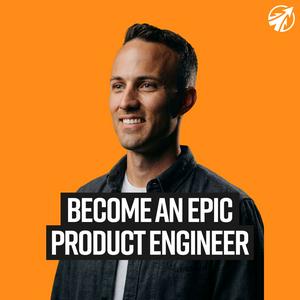
Om Become an Epic Product Engineer
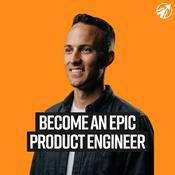
Become an Epic Product Engineer is Kent C. Dodds's interview podcast about skills that stay valuable as AI takes on more implementation: product engineering - blending technical depth with product judgment, user empathy, and problem clarity.
Each episode is a long-form conversation with a guest who has shipped real software and cares about building the right thing before making it right. You get full audio, transcripts, structured show notes, homework (one concrete action to try), and links from the conversation.
Canonical home for the show and every episode page: https://www.epicproduct.engineer/become-an-epic-product-engineer-podcast
New episodes publish on Wednesdays (America/Denver). Video is added on Transistor for supported podcast apps when available.
Complements Better with Kent - Kent's solo series on durable skills for people who ship software.
Podcast-webbplatsLyssna på Become an Epic Product Engineer, Tabberaset och många andra poddar från världens alla hörn med radio.se-appen
Hämta den kostnadsfria radio.se-appen
- Bokmärk stationer och podcasts
- Strömma via Wi-Fi eller Bluetooth
- Stödjer Carplay & Android Auto
- Många andra appfunktioner
Hämta den kostnadsfria radio.se-appen
- Bokmärk stationer och podcasts
- Strömma via Wi-Fi eller Bluetooth
- Stödjer Carplay & Android Auto
- Många andra appfunktioner

Become an Epic Product Engineer
Skanna koden,
ladda ner appen,
börja lyssna.
ladda ner appen,
börja lyssna.
Become an Epic Product Engineer: Poddsändningar i Familj
 Sverige