
Lyssna på den här podden kostnadsfritt i appen: Ladda ner gratis i App Store
radio.se
Sleeptimer
Spara kanal
863 avsnitt
The Life Scientific: Adrian Crellin
2026-11-23 | 26 min.Professor Adrian Crellin originally set out to be a forensic medic but a chance encounter with an oncologist set him on a path to work in radiotherapy. Whilst unfashionable at the time, it satisfied his latent desire to both work in high end physics along with helping patients on the hospital wards. As a result, he's been a cancer specialist for more than 40 years - during which time radiotherapy has undergone a dramatic transformation, now being used to treat nearly half of all cancer patients more quickly and safely than ever before. As NHS England’s Clinical Lead for Proton Beam Therapy, Adrian pioneered the introduction and use of this precise high-energy radiation treatment within the UK. It accurately targets tumours with less harm to surrounding healthy tissue compared to conventional radiotherapy. Alongside a detailed research programme, his work has transformed treatment of children and young adults with cancer, reducing long-term side effects and improving quality of life. But Adrian’s life has also transitioned from doctor to patient: in 2016, he received treatment for metastatic prostate cancer in the Bexley Wing at St James's Hospital in Leeds - the same centre which he had helped to launch. He’s since become an advocate for cancer research; and says we need to reshape how we describe life with incurable cancer, now that smarter, kinder treatments allow patients to live fulfilling lives alongside the disease.The Life Scientific: Tom Hart
2026-11-16 | 26 min.How do you keep tabs on millions of penguins in the most remote places on Earth, when there's nobody there to do the watching? Tom Hart is a Professor of Conservation and Ecology at Oxford Brookes University and self-described "penguinologist". He's pioneered the use of remote camera networks, drones and AI to monitor Antarctica's wildlife on an unprecedented scale. He's also a founder of the award-winning Penguin Watch citizen science project, which has harnessed the power of thousands of volunteers around to world, to help with analysing this data - the results of which are helping scientists to understand how penguins are responding to the rapidly changing world… Tom tells Professor Jim Al-Khalili about how he first "caught Antarctica", hitchhiking on tourist cruises and why it's worth paying attention to penguin poo.The Life Scientific: Asel Sartbaeva
2026-11-09 | 26 min.Vaccines save millions of lives each year but, to work, most need to be kept cold throughout their journey, from the factory where they’re made to the clinic where they’re given. This relies on what’s known as the cold chain, a global network of fridges, freezers and icepacks. The chain is not only expensive to maintain, it’s incredibly vulnerable to breaking. In low- and middle- income countries, in particular, transport delays, power cuts and equipment failures often cause vaccines to spoil before they reach the people who need them. An urgent quest in public health has been to find a way to stabilise vaccines, at room temperature, so that they no longer need this cold chain. This occurred to Asel Sartbaeva, during a routine visit to the GP with her newborn daughter. Originally from Kyrgyzstan and now Associate Professor of Chemistry at Bath University, Asel investigates silica-based materials. Not a typical background for someone working on vaccines, but it gave her a fresh perspective. She wasn’t focussed on changing the vaccine itself, instead, she asked a different question: could she use her knowledge silica-based materials and coat the vaccine in a protective shell that would allow it to survive at room temperature, eliminating the need for refrigeration? Her solution? A perfectly tailored protective coat made silica, found in beach sand. If human trials are successful, she hopes that vaccines will travel to wherever they are needed by envelope and on drones.The Life Scientific: Robert Ballard
2026-11-02 | 26 min.Finding the wreck of the Titanic would be a career-defining achievement for most people. For oceanographer Robert Ballard, it's just one chapter in a life packed full of extraordinary marine exploration. Bob located the world-famous shipwreck in 1985, but even before that, he’d helped prove the existence of hydrothermal vents: underwater formations surrounded by ecosystems flourishing in the ocean’s depths - without sunlight; a discovery that revolutionised our understanding of where and how life can flourish... Over a career spanning six decades, Bob has pioneered revolutionary technologies, discovered some of history's most famous shipwrecks and inspired new generations of explorers. What's more, as he tells Professor Jim Al-Khalili, he's still exploring mysteries of the deep today...The Life Scientific: Gillian Forrester
2026-10-26 | 26 min.What do the very first writhing movements of babies have in common with orangutans solving problems for food? Well, according to Gillian Forrester they may both offer clues about how we humans developed language. Working with her great ape colleagues, Gilly Forrester – Professor of Comparative Cognition at the University of Sussex – has dedicated her career to finding out how we became the talkative, tool-using troop we are today. Examining the link between movement, spoken language and social communication, Gilly’s research has looked at how brain organisation could affect the likelihood of being diagnosed with autism and ADHD, as well as how training dexterity may improve linguistic fluency in children. In conversation with Professor Jim Al-Khalili, Gilly reveals what she believes it really means to be human, and the pair discover that despite his PhD in nuclear physics, Jim might not be quite as smart as a chimp. Presented by Jim Al-Khalili
Fler podcasts i Vetenskap

Trendiga poddar i Vetenskap









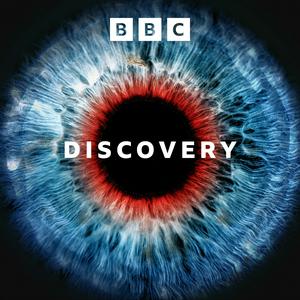
Om Discovery
Explorations in the world of science.
Podcast-webbplatsLyssna på Discovery, The Rest Is Science och många andra poddar från världens alla hörn med radio.se-appen
Hämta den kostnadsfria radio.se-appen
- Bokmärk stationer och podcasts
- Strömma via Wi-Fi eller Bluetooth
- Stödjer Carplay & Android Auto
- Många andra appfunktioner

Discovery: Poddsändningar i Familj
 Sverige