
Lyssna på den här podden kostnadsfritt i appen: Ladda ner gratis i App Store
radio.se
Sleeptimer
Spara kanal
139 avsnitt
Shoe of Damocles
2026-09-10 | 1 h 19 min.We're back after a break, and the August interim docket handed us two per curiam standing rulings. In Trump v. California, the Court stayed the injunction against the mail-ballot executive order because the states' injuries were too hypothetical, even as the Postal Service's final rule has already been enjoined and is already back at the Court. In National Park Service v. National Trust for Historic Preservation, the Court let the ballroom construction continue because a historic preservationist's aesthetic injury is "mere offense," which leaves us asking why a crocodile counts and the White House doesn't. We work through ripeness, the Purcell principle turned inside out, the standing realignment that may not have realigned after all, and why the Chief dissented. Along the way: the Justices' papers and who really owns them, a philosopher's note on conditionals, a mixed metaphor unmixed, and the difference between teaching from a script and teaching from a cocktail napkin.
Highlights
[00:00:21] Opening: a scheduled Friday recording is no longer unpredictable; Dan is teaching fed courts out of "Baude et al." (Hart & Wechsler), and Will insists he's only holding it in trust.
[00:02:27] Jodi Kantor's NYT story on the justices' papers: Justice Scalia made no plan, Justice Ginsburg's Library of Congress conditions, and whether papers printed on government paper are personal property.
[00:08:17] Will's tentative new institutionalist view: release everything after ten years so the justices have to talk to each other in person.
[00:11:26] Feedback: Yale philosopher Daniel Greco on conditionals in formal logic vs. spoken English; a listener catches Will retelling the "thriving atrocities practice" story from Season 1.
[00:15:27] Two per curiam standing rulings from the August interim docket, 6-3 and 5-4.
[00:16:08] Trump v. California: Executive Order 14399's citizenship lists, prosecution priority, and Postal Service rule, plus a lowercase-r republican form of government and Luther v. Borden.
[00:24:19] The stay: no standing, no ripeness, and whether ripeness is jurisdictional or equitable.
[00:27:31] Walking Sections 2(a), 2(b), and 3: making a list is not an injury, "no well-founded fear" of prosecution, and Clapper.
[00:32:26] The Post Office's final rule issued the weekend before the opinion, is already enjoined again, and is already back at the Court; cremated humans, replica explosives, and enough green ink.
[00:36:29] Predictions: Will says at least five justices will keep the rule off the books before this election; Dan bets at least one majority justice says the president is fine; the major questions doctrine vs. Gregory v. Ashcroft.
[00:39:09] Purcell inside out: when the body that isn't supposed to regulate elections meddles on the eve of one, courts stand back to let instability prevail.
[00:45:11] The dissents: Justice Sotomayor's four don't-panic pages vs. Justice Jackson's 23, and her recurring Trump v. CASA-era argument that the Court should ask who is actually right.
[00:49:45] "Another shoe drop in the Kafkaesque nightmare": Dan objects to the mixed metaphor, researches the origin of the other shoe, and proposes the shoe of Damocles.
[00:53:42] Re and Paz-Priel's The Standing Realignment lands in the Supreme Court Review the same week an old-school 6-3 standing lineup comes back.
[00:56:53] National Park Service v. National Trust: the demolished East Wing, 40 U.S.C. § 8106, Nixon's tennis nets, and a strong argument on the merits the Court never reaches.
[01:00:12] Alison Hoagland's aesthetic injury: Lujan's crocodile, Mineral King, the White House as a national park, and the majority's "mere offense" line.
[01:05:44] Alliance for Hippocratic Medicine and Judge Ho's aesthetic-babies theory; the ballroom is closer to a national park than to a baby; seeing X vs. not seeing Y.
[01:08:21] Why the Chief dissented (the Smithsonian theory vs. the good-lawyer theory) and who wrote the per curiam ("Start with this" sounds like Justice Gorsuch).
[01:13:52] Breaking mid-recording: National Republican Congressional Committee v. Brown, the FCC's lowest unit charge, Justice Jackson alone in dissent, deferred to next time.
[01:15:33] Teaching notes: Will's one-page Word docs (now consolidated by Claude into something beyond a cocktail napkin) vs. Dan's scripts; sign-off.
Relevant links
Cases
Trump v. California — per curiam and dissents
Executive Order 14399, Ensuring Citizenship Verification and Integrity in Federal Elections (91 Fed. Reg. 17125)
National Park Service v. National Trust for Historic Preservation — per curiam and dissent
40 U.S.C. § 8106
National Republican Congressional Committee v. Brown — per curiam and dissent
Commentary & articles
Jodi Kantor's NYT story on the justices' papers (Sept. 1, 2026)
Steve Vladeck, "The Justices' Papers" (One First, Sept. 7, 2026)
Will Baude, "The Purcell Principle and the Post Office" (Divided Argument blog, Sept. 2, 2026)
Will Baude, "Esthetic Standing in the White House Ballroom Case" (Divided Argument blog, Aug. 31, 2026)
Richard M. Re & Yoav Paz-Priel, "The Standing Realignment" (Supreme Court Review)
Steve Vladeck, "Four Lessons from the Ballroom Ruling" (One First, Sept. 3, 2026)
Josh Blackman, "Strictly Ballroom: Justice Kavanaugh Defeats Chief Justice Roberts" (Volokh Conspiracy, Aug. 31, 2026)
Other
Divided Argument S1E7, "Triple Bank Shot" (the first telling of the atrocities-practice story)
Audio Arguendo (the courts-of-appeals argument podcast)A Thriving Atrocities Practice
2026-08-19 | 1 h 15 min.After following up on Justice Alito's summer interview, the new birthright-citizenship executive orders, and the Court's record-low approval numbers, we devote the episode to Cisco Systems v. Doe, the Falun Gong surveillance case that closes the door Sosa v. Alvarez-Machain left open for new Alien Tort Statute claims. We try to build a theory of the ATS from first principles — Section 9 of the Judiciary Act of 1789, the law of nations, and the Marbois affair — before running through two decades of the Court narrowing the statute. Then we ask what to make of "door closing" as a phenomenon, from Edwards v. Vannoy to Rucho, and whether the Court would really be stuck if the perfect ATS unicorn finally showed up. Along the way: whether Justice Alito is an I-95 or an Amtrak guy, the seven-case October calendar led by Suncor, Rooker anti-Feldmanism, and a Phoenix bar band called the Blackstone Three.
Highlights
[00:00:21] Opening: 29 episodes makes a record-breaking season, and the secret to sub-4-hour recording sessions
[00:02:28] Justice Alito's WSJ interview with James Taranto: "Obviously I'm here for another term," the vultures, and his high school English teacher's psychoanalysis
[00:06:27] How Will became a libertarian: Mr. Flannery, Lexis news alerts for "Ayn Rand," and golfer David Duval
[00:09:48] Still no action on the mail-in voting applications; a White House ballroom emergency application expected any day
[00:11:15] No rehearing petition in Trump v. Barbara — instead, new executive orders probing the decision's edges
[00:15:32] The October calendar: only 7 cases, starting with Suncor — "conservative intuitions in search of a constitutional clause"
[00:17:04] Mailbag: Rooker anti-Feldmanism via Lance v. Dennis, and Michael Rosman on whether sex-segregated sports are really "equal opportunity"
[00:20:32] Gallup has the Court at 33% approval, a record low — the maximally anti-legitimacy strategy
[00:22:35] The main event: Cisco Systems v. Doe — an anonymous person versus a faceless corporation
[00:23:16] ATS first principles: Section 9 of the Judiciary Act of 1789, the law of nations as brooding omnipresence, and the Marbois affair
[00:37:27] The 1980 revival, Sosa v. Alvarez-Machain, and the door Justice Souter left ajar
[00:42:45] Two decades of narrowing: Kiobel, Jesner, Nestlé — and Will's brush with a thriving atrocities practice
[00:47:33] Cisco closes the door; the Edwards v. Vannoy parallel, and whether door closing is ever dicta
[00:52:33] Door closing as a genre: Vieth v. Jubelirer, Rucho — a Green Bag piece for Richard Re
[00:56:36] What about pirates? The Blackstone 3 — the doctrine, and the Phoenix bar band
[01:00:18] Implied causes of action, the slow death of Bivens, and the Ex parte Young irony after Trump v. Cook
[01:05:19] Scoring the opinion: a win for the Bradley–Goldsmith "Erie algorithm" — or selective originalism?
[01:13:33] Sign-off: rate and review — and if we go quiet, Will has been taken by pirates
Relevant links
Cases
Cisco Systems, Inc. v. Doe I — slip opinion
Trump v. Barbara — the birthright-citizenship decision the new executive orders are testing
Suncor Energy (U.S.A.) Inc. v. County Commissioners of Boulder County — the OT26 opener
Sosa v. Alvarez-Machain, 542 U.S. 692 (2004)
Edwards v. Vannoy, 593 U.S. 255 (2021) — slip opinion
Lance v. Dennis, 546 U.S. 459 (2006) (per curiam) — the Stevens "Rooker good, Feldman bad" dissent
Commentary & articles
CNN on the Alito interview — coverage of James Taranto's Wall Street Journal interview
Gallup, "Supreme Court Job Approval Slumps to Record Low"
Jonathan Adler, "Amicus Brief in Suncor Energy v. County Commissioners of Boulder County" — the solo plaintiffs-side amicus
Oona A. Hathaway et al., "Has the Alien Tort Statute Made a Difference?," 107 Cornell L. Rev. (2022) — the settlements study cited in Cisco footnote 2
Carlos M. Vázquez & Stephen I. Vladeck, "State Law, the Westfall Act, and the Nature of the Bivens Question," 161 U. Pa. L. Rev. 509 (2013)
Samuel L. Bray & Paul B. Miller, "Getting Into Equity," 97 Notre Dame L. Rev. 1763 (2022) — why equity never needed causes of action
Other
Divided Argument, "Separation-of-Powers Police" (S4E23) — the Daryl Levinson Law for Leviathan book episode
The Blackstone Three — original and cover music for all events, parties, and concert venuesVery Civilized Orangutans
2026-08-12 | 1 h 9 min.We squeeze in one more episode before Will's vacation, tying the single-season record in the process. The mailbag then demands a reckoning on whether Magneto's powers are really limited to ferrous metals, along with the origins of the S tier and the truth-value of conditional predictions. The main event is Hunter v. United States, which holds that a plea bargain's appeal waiver is unenforceable when enforcing it would work a "miscarriage of justice." We try to figure out where that rule could possibly come from — contract law? Rule 11? the supervisory power? procedural common law? — and why an opinion this law-free commanded this much agreement, while the separate writings range from a declaration of war on plea bargaining itself to a hunt for a sounder source of authority. Along the way: a field trip to the shuttered taproom of Ybarra v. Illinois fame, and thanks to the expanding Divided Argument production universe.
Highlights
[00:00:21] Opening: squeezing in one more before Will's vacation — and tying the single-season episode record.
[00:01:42] The only Court news: Trump v. California, the mail-in-voting application, is fully briefed.
[00:03:15] Mailbag: "lead is not magnetic." Are Magneto's powers limited to ferrous metals? The comic-book record says no.
[00:05:40] Why is S the top tier? Japanese video-game rank screens and contested backronyms.
[00:08:09] Parsec retcons in Star Wars, and the art of redeeming past misstatements.
[00:09:09] Caleb Rogers on the logic of conditional predictions: "if A, then B" is true whenever not-A.
[00:11:08] Thank-yous to the production universe — and the show is now on YouTube.
[00:12:06] Jessie Henderson's field trip: the Aurora Tap of Ybarra v. Illinois fame, located and (sadly) shuttered.
[00:15:30] The main event: Hunter v. United States — appeal waivers in federal plea bargains.
[00:21:30] The wrinkle: a forced-medication condition, and a judge who says "you have a right to appeal" anyway (cf. Class v. United States).
[00:24:45] Plea bargains as free-floating general contract law — territory of the forthcoming Epps & D'Onfro Harvard Law Review paper.
[00:26:52] The circuit split: the Fifth Circuit's statutory-maximum rule vs. everyone else's miscarriage-of-justice exception.
[00:29:16] The real puzzle: where does any of this authority come from — Rule 11? the judiciary's own self-image?
[00:37:51] What definitely counts: race-based sentences, a no-pregnancy condition, sentencing by 12 orangutans.
[00:40:40] Dan logs a scorecard prediction on what the Fifth Circuit does on remand.
[00:43:04] How does an opinion this mushy get 8 votes in 2026? In for a dime, in for a dollar.
[00:45:40] The Gorsuch concurrence comes out swinging against plea bargaining itself — Stuntz and Barkow make the U.S. Reports.
[00:52:50] The Kavanaugh concurrence's high bar, and the 3–3–2 math of who wouldn't take sides.
[00:55:00] The Thomas dissent: no source of law — and no sentencing appeals for most of American history anyway.
[01:00:20] The Barrett concurrence: procedural common law, with citations to Professor Barrett.
[01:08:16] Sign-off: thanks to the Constitutional Law Institute; Dan's predictions may yet be made falsifiable.
Relevant links
Cases
Hunter v. United States — slip opinion
Trump v. California
Commentary & articles
"Hunter v. United States — the most important criminal case of the term" — SCOTUSblog opinion analysis
Amy Coney Barrett, "The Supervisory Power of the Supreme Court" — 106 Colum. L. Rev. 324 (2006), cited in the Barrett concurrence
Amy Coney Barrett, "Procedural Common Law" — 94 Va. L. Rev. 813 (2008), the other self-citation
Other
Ice by Magneto — last episode, where the Magneto debate began
Smart Microwave — the Chatrie episode, where the Aurora Tap of Ybarra v. Illinois first came up
Gorsuch Genie — our episode with Rachel Barkow on Justice Abandoned, now cited in the Gorsuch concurrenceIce by Magneto
2026-08-03 | 1 h 4 min.We're back — maybe getting a little too scheduled — with one opinion on the docket: West Virginia v. B.P.J. and Little v. Hecox, where the Court held that states may limit girls' and women's sports teams to biological sex without violation Equal Protection or Title IX. First, though, Will collects on a two-year-old prediction when the Court grants Jouppi v. Alaska, an Institute for Justice case about a five-figure airplane forfeited over a six-pack of beer. On the main event, we work through how the opinions are written (no pronouns, no "Lindsay"), what the litigants' Title IX concession did to the case, and whether there is any such thing as an as-applied equal protection challenge. Will makes a big-swing prediction about transgender status and heightened scrutiny, and we ask whether the Court's reasoning can be squared with VMI and the anti-stereotyping cases. Along the way: fencepost problems, Magneto's powers, Magic: The Gathering's crossover-IP wars, scrawny men, and Justice Kavanaugh's ode to the championship trophy.
Highlights
[00:00:21] Opening: continuing the roll, "starting to get a little scheduled," and record-setting season ambitions
[00:02:05] Summer interim-docket check-in: a new SG filing on mail-in voting; still no rehearing petition in the birthright-citizenship case
[00:03:23] Filing-day counting and the classic fencepost problem
[00:04:50] Will doesn't condone violence, Dan; UFC, violent video games, and Dungeons & Dragons
[00:07:46] The prediction workflow pays off: Will called the IJ excessive-fines cert push back in May 2024 (Culley)
[00:08:05] Cert granted in Jouppi v. Alaska: a 5-figure aircraft forfeited over a 6-pack of beer
[00:09:58] Scorecard methodology: easy predictions, Magneto clauses, and a slugging-percentage proposal
[00:12:51] Dan's good news: Constitutional Rights in General Private Law, accepted at Harvard Law Review
[00:13:32] The main event: West Virginia v. B.P.J. and Little v. Hecox — states can keep transgender athletes off girls' and women's teams
[00:15:25] How the opinions are written: no pronouns, and the majority never says "Lindsay"
[00:18:44] The Thomas concurrence: suspect class, "biological men and boys who identify as girls," and the Josef Pieper abuse-of-language quote
[00:21:49] Title IX: the statutory text, the litigants' concession, and what the dissents are trying to preserve
[00:29:39] The Equal Protection Clause: Skrmetti, two kinds of anti-trans laws, and Will's big-swing prediction on heightened scrutiny
[00:35:29] VMI's inherent differences, bathrooms, and the anti-stereotyping mainstays (Craig v. Boren)
[00:43:33] Is there such a thing as an as-applied equal protection challenge? Footnotes 7 and 9, scrawny men, and Nguyen
[00:52:35] The Ninth Circuit's dropped thread: Idaho's invasive verification testing and the cis-woman plaintiff
[00:54:41] Justice Kavanaugh, the sports justice: the championship-trophy passage and Flood v. Kuhn lore
[00:56:52] The flip side: does Title IX sometimes require excluding transgender athletes? Dueling predictions
[01:00:30] Why this isn't Bostock: Gorsuch, formalism, and a contested Indian-law analogy
[01:02:49] Sign-off — and a preemptive accusation that Will will game the scorecard by refusing to record
Relevant links
Cases
West Virginia v. B.P.J. / Little v. Hecox — slip opinion
Jouppi v. Alaska — Institute for Justice case page
Culley v. Marshall
United States v. Skrmetti
United States v. Virginia (VMI)
Nguyen v. INS
Flood v. Kuhn
Commentary & articles
D'Onfro & Epps, "The Fourth Amendment and General Law" — the Yale Law Journal predecessor to the new Harvard Law Review piece announced on the show
Other
Divided Argument, "Originalism Hulk" — the back-catalogue episode whose new custom cover art comes up in the Marvel tangentThe Based Direction
2026-07-27 | 54 min.We're back from vacation and chipping away at the summer backlog. Before the substance: listeners weigh in on our AI-generated cover art, Claude's new prediction scorecard grades our respective forecasting records, and Justices Kagan and Barrett take the Court's budget request — and some docket-terminology talk — to Congress. Then we spend the rest of the show on T.M. v. University of Maryland Medical System Corporation, in which the Rooker-Feldman doctrine, pronounced dead in the Green Bag two decades ago, proves alive enough to reach state-court judgments still on appeal. We try to figure out what the doctrine actually is, whether § 1257 or § 1331 is doing the work, and why the Court's committed formalists split down the middle. Along the way: insider trading as a University of Chicago virtue, a concurrence that may be playing a long game on federal habeas, and a dissent that's "exactly correct and not the law."
Highlights
[00:00:21] Opening: back from vacation, episode 26 of the season, chasing the all-time record of 29
[00:01:15] Listener verdict on the AI back-catalog covers — Proximity Mines in the Facility gets its due, and no, we're not commissioning an artist
[00:03:33] Will's Kant remarks draw "especially strenuous criticism"; he declines to recant
[00:04:38] Claude's prediction scorecard grades the back catalog: Dan 82.4%, Will 71.2% — hedged singles vs. high-variance swings
[00:07:06] Are prediction markets just gambling? Kalshi, Manifold, and insider trading as a University of Chicago virtue
[00:10:16] Justices Kagan and Barrett testify before the Appropriations Committees: the security budget, life with a detail, and a remembrance of Lindsey Graham
[00:14:03] Kagan on the "terminology nightmare" — shadow vs. emergency vs. interim docket — and why the shadow docket "is not currently shadowy"
[00:16:14] The main event: T.M. v. University of Maryland Medical System Corporation, a fed-courts-class case if there ever was one
[00:17:44] Doctrine origins: Rooker v. Fidelity Trust, District of Columbia Court of Appeals v. Feldman, Exxon Mobil v. Saudi Basic's attempt to bury them, and Sam Bray's Green Bag obituary
[00:20:35] What Rooker actually held: no bill in equity to void a state judgment — only the Supreme Court has appellate jurisdiction over state courts
[00:25:17] The unusual lineup: Sotomayor writing for Thomas, Alito, Kavanaugh, and Jackson; Barrett in dissent with the Chief, Kagan, and Gorsuch
[00:28:53] Where does the doctrine come from — § 1257 exclusivity, § 1331 "original" jurisdiction, or something constitutional about "inferior" courts?
[00:38:42] Will's alternative: you're either in appellate mode or collateral estoppel mode — and the Full Faith and Credit Act already covers this
[00:42:44] The Thomas concurrence: Rooker "correct as an original matter" — and footnote 4's possible long game on federal habeas
[00:46:34] The puzzle of the missing Feldman: Thomas's concurrence is almost entirely about Rooker
[00:48:06] The Barrett dissent — "exactly correct and not the law" — and Rooker-Feldman given an inch
[00:51:49] What goes in the fed courts supplement, and whether Hart and Wechsler needs a bigger Rooker-Feldman chapter again
[00:53:25] Sign-off: an efficient episode; browse the back-catalog art at dividedargument.com
Relevant links
Cases
T.M. v. University of Maryland Medical System Corp. — slip opinion
Rooker v. Fidelity Trust Co., 263 U.S. 413 (1923)
District of Columbia Court of Appeals v. Feldman, 460 U.S. 462 (1983)
Exxon Mobil Corp. v. Saudi Basic Industries Corp., 544 U.S. 280 (2005)
Prentis v. Atlantic Coast Line Co., 211 U.S. 210 (1908)
Commentary & articles
Samuel Bray, "Rooker Feldman (1923–2006)," 9 Green Bag 2d (2006) — the obituary
William Baude, "The Interim Docket" (SSRN, forthcoming U. Chi. L. Rev.) — now with Justice Kagan's terminology testimony incorporated
David Lat, "Justices Kagan And Barrett Are The Spokeswomen SCOTUS Needs Right Now" (Original Jurisdiction)
SCOTUSblog, "Justices Kagan and Barrett testify before Congress"
Other
The custom back-catalog episode art — tell us your favorites
Fler podcasts i Nyheter




Trendiga poddar i Nyheter






Om Divided Argument
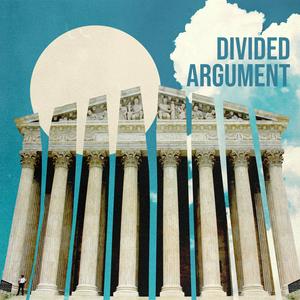
An unscheduled, unpredictable Supreme Court podcast. Hosted by Will Baude and Dan Epps. In partnership with SCOTUSblog.
Podcast-webbplatsLyssna på Divided Argument, Politiken och många andra poddar från världens alla hörn med radio.se-appen
Hämta den kostnadsfria radio.se-appen
- Bokmärk stationer och podcasts
- Strömma via Wi-Fi eller Bluetooth
- Stödjer Carplay & Android Auto
- Många andra appfunktioner
Hämta den kostnadsfria radio.se-appen
- Bokmärk stationer och podcasts
- Strömma via Wi-Fi eller Bluetooth
- Stödjer Carplay & Android Auto
- Många andra appfunktioner

Divided Argument
Skanna koden,
ladda ner appen,
börja lyssna.
ladda ner appen,
börja lyssna.
 Sverige