

Lyssna på den här podden kostnadsfritt i appen: Ladda ner gratis i App Store
radio.se
Sleeptimer
Spara kanal
50 avsnitt
Dhirubhai Ambani: Fins
2016-03-25 | 14 min.Professor Sunil Khilnani from the King's India Institute in London, on the life and legacy of the Indian business tycoon Dhirubhai Ambani, founder of Reliance Industries. The son of a penurious schoolteacher, Ambani credited himself with an almost animal instinct for trading, coupled with a steel trap memory and an appetite for audacious risk. Today fifteen per cent of all India's exports go out in his company's name. It's the ultimate rag to riches story, mixed with street cunning and dazzling deals. In one case, which began with a tip from an underworld don, Ambani executives were accused of violating the Official Secrets Act by possessing sensitive Cabinet documents, including a draft national budget. A joke quickly did the Delhi rounds: the budget wasn’t leaked to Reliance; Reliance had leaked the budget to the ministry.
Producer: Mark Savage
Editor: Hugh LevinsonMF Husain: Hindustan Is Free
2016-03-24 | 14 min.Professor Sunil Khilnani, from the King's India Institute in London, looks at controversy over the Indian artist MF Husain, who spent the last days of his life in exile. Husain is considered by some to be the face of modern art in India but not necessarily by people in India itself. Husain died in his nineties having completed around ten thousand works. His paintings often attracted high prices but he became a target for mob anger over his portraits of Hindu goddesses and Indian feminine icons. Female deities had often shown nude in traditional art, but what enraged right-wing Hindus was that these images were created by a Muslim artist. "Had Husain been less popular beforehand, he probably would have been less hated." says Professor Khilnani.
Producer: Mark SavageCharan Singh: A Common Cause
2016-03-23 | 14 min.Professor Sunil Khilnani, from the King's India Institute in London, explores the life and legacy of Charan Singh, the lawyer turned politician who championed the cause of India's farmers. Singh is remembered today as the politician who took on Indira Gandhi in the Congress Party’s heartland state. Uttar Pradesh. He redistributed power and altered the social structure of Northwest India, non violently. And he helped the world see the potential of the Indian farmer a bit more clearly. He succeeded in becoming India's first peasant prime minister but went from the highest office in a flash, replaced by his nemesis Indira Gandhi. Although today he is most often remembered for being a leader of his own caste, Professor Khilnani argues that Charan Singh has a unique status in Indian history.
Producer: Mark SavageSatyajit Ray: India without Elephants
2016-03-22 | 13 min.Sunil Khilnani explores the life and work of filmmaker Satyajit Ray.
In the history of Indian cinema, there is a Before Ray, and an After. As Sunil Khilnani says, “he’s the first truly modern filmmaker we have.” But Satyajit Ray’s career in India might not have continued past its first few films had he not been celebrated in the West.
In his native Bengal, several of his films were popular. More were loathed. In today’s thriving Bengali film culture, he’s often held at arm’s length: the guy who served it up for the West, and served it up a little sweet.
But Ray’s films made ideas hanging in the air feel fresh, for he brought to them an unusually large range of small gifts: psychological and sensory acuity, humour, humanism, a deep appreciation of family relationships, an ability to withhold judgement, an ear equally adept at dialogue and sound, and the visual imagination of a third-generation illustrator and photographer. These were sufficient to allow him, time and again, to achieve a realism few in Indian cinema wanted to meet.
“It’s the truth in a situation that attracts me,” he told his actors. “And if I’ve been able to show it, that's enough for me.”
The result was a body of work of which the director Akira Kurosawa would remark, “Not to have seen the cinema of Ray means existing in the world without seeing the sun or the moon.”
Producer: Martin WilliamsIndira Gandhi: The Centre of Everything
2016-03-21 | 14 min.Professor Sunil Khilnani, from the King's India Institute in London, looks at the life of Indira Gandhi, India's first woman prime minister, whose darkest moment was a two year period known as "the emergency". Jails filled up with her critics while journalists and editors were detained alongside the political opposition. Those arrested could be held without trial and and she attempted to reduce the birth rate by offering men incentives to be sterilized. "Indira Gandhi in many ways issued the greatest threat to democracy in independent India’s history," says Professor Khilnani, "weakening constitutional regularities established by her father. Yet the enduring effect of her rule was to open the state to a deeper and more accessible democracy".
Producer: Mark Savage
Music: Talvin Singh
Fler podcasts i Historia
 The Rest Is HistoryHistoria
 MilitärhistoriepoddenHistoria, Samhälle och kultur
 SeriemördarpoddenHistoria, Verkliga brott
 BildningsbyrånDokumentär, Historia, Samhälle och kultur
 The Rest Is ClassifiedHistoria
 Sveriges Mörka MinnenHistoria
 Historia.nu med Urban LindstedtHistoria, Samhälle och kultur
 Historien omHistoria
 KrigshistoriepoddenHistoria
Trendiga poddar i Historia
 American ScandalDokumentär, Historia, Samhälle och kultur
 Svenska högtider och traditionerHistoria, Religion och spiritualitet, Samhällsvetenskap, Vetenskap
 SPYCRAFT 101Historia, Stat och kommun, Utbildning
 Betwixt The Sheets: The History of Sex, Scandal & SocietyHistoria
 Not Just the TudorsHistoria
 Ancient Lives with Mary BeardDokumentär, Historia, Samhälle och kultur
 پادکست رخHistoria, Skönlitteratur
 The WW2 PodcastHistoria, Samhälle och kultur
 After Dark: Myths, Misdeeds & the ParanormalHistoria, Samhälle och kultur, Verkliga brott
 Hallwylska poddenHistoria, Samhälle och kultur
 MakabertHistoria, Samhälle och kultur, Utbildning, Verkliga brott
 Ancient Greece DeclassifiedHistoria, Utbildning
 BattlegroundHistoria
 RevolutionsHistoria, Utbildning
 Dan Snow's History HitHistoria
 Besynnerliga BerättelserDokumentär, Historia, Samhälle och kultur
 En Economistas PodcastAffärsnyheter, Historia, Nyheter, Näringsliv, Relationer, Samhälle och kultur, Utbildning
 Real DictatorsDrama, Historia, Skönlitteratur
 TidsmaskinenHistoria, Nyheter, Politik, Samhällsvetenskap, Vetenskap
 Short History Of...Historia
 Arkeologi & Historia - podden som gräver i vårt kulturlandskapHistoria, Samhälle och kultur, Samhällsvetenskap, Vetenskap
 Past Present FutureFilosofi, Historia, Nyheter, Politik, Samhälle och kultur
 The AncientsHistoria
 You're Wrong AboutHistoria, Samhälle och kultur, Verkliga brott
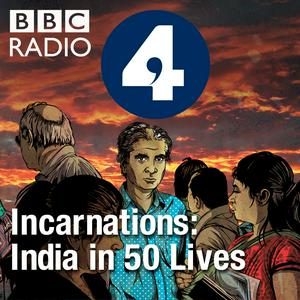
Om Incarnations: India in 50 Lives
The history of India told through the lives of 50 phenomenal people.
Podcast-webbplatsLyssna på Incarnations: India in 50 Lives, World War II with Tom Hanks och många andra poddar från världens alla hörn med radio.se-appen
Hämta den kostnadsfria radio.se-appen
- Bokmärk stationer och podcasts
- Strömma via Wi-Fi eller Bluetooth
- Stödjer Carplay & Android Auto
- Många andra appfunktioner
Hämta den kostnadsfria radio.se-appen
- Bokmärk stationer och podcasts
- Strömma via Wi-Fi eller Bluetooth
- Stödjer Carplay & Android Auto
- Många andra appfunktioner

Incarnations: India in 50 Lives
Skanna koden,
ladda ner appen,
börja lyssna.
ladda ner appen,
börja lyssna.
Incarnations: India in 50 Lives: Poddsändningar i Familj
 Sverige