
Lyssna på den här podden kostnadsfritt i appen: Ladda ner gratis i App Store
radio.se
Sleeptimer
Spara kanal
96 avsnitt
ELECTROMAGNETIC THEORIES OF CONSCIOUSNESS - Tam Hunt #94
2026-10-14 | 1 h 28 min.Do EM fields across and around the body and brain correspond to and contain information about our experience of consciousness? Can resonance help explain how larger and smaller systems with consciousness can harmonise into a single field of consciousness? Does mind evolve as matter evolves?
Today we have the possibility that consciousness relates to electromagnetic fields to look into. So, we get into the arguments for why consciousness might be baked into the physical world as panpsychism holds; we compare General Resonance Theory to other electromagnetic theories of consciousness; look at how GRT solves some of the problems of panpsychism like the combination problem and the boundary problem; and how we might use resonance to theorise about consciousness at various levels of existence above and below our single organism subjective experiences; we get into why the hippies were right about vibration, fields and resonance, and also what the hippies got wrong; And we also get into some of modern science that seems to show an alignment between science and spiritual ideas rather than an incompatibility.
For this broad range of topics we are fortunate to have the polymath, environmental lawyer, author and philosopher at University of California Santa Barbara, Tamlyn Hunt. He’s written over 40 academic papers and 3 books for the general public, “Eco, Ego, Eros”, “Mind, World, God” ,and his brand new book “The Hippies Were Right”, which we focus on today.
What we discuss:
00:00 Intro.
06:00 The omission of mind from our sciences of nature.
10:30 Panpsychism is the least crazy explanation.
14:30 Analogies between scientific theories and spiritual traditions.
27:30 As matter evolves, mind evolves.
31:40 The Wattsian Vedanta approach.
34:30 General Resonance Theory explained.
40:30 The brains nested hierarchies of EM Fields contain the information about consciousness.
46:00 EM effects are 5000 times faster than neural firings.
55:30 “The hippies were right” about consciousness.
57:00 Schrödinger was influenced by vedanta.
01:05:30 Nested cognitive systems - Micheal Levin’s ‘bioelectric code’ Vs GRT.
01:10:00 Neurones are not the only electricity generating cells - all cells are basically batteries.
01:15:45 EM theory applied to huge structures like stars and galaxies.
01:21:00 Cosmic consciousness and deep time.
References:
Tam Hunt, “The Hippies Were Right!: About consciousness and Everything else.” 2026
Tam Hunt, “Mind, World, God: Science and Spirit in the 21st Century” , 2017
Tam Hunt & Jonathan W. Schooler, ‘The Easy Part of the Hard Problem: A resonance Theory of Consciousness’, 2019 paper.
Tam Hunt & Mostyn Jones, ‘Fields or Firings? Comparing the spike code and electromagnetic field hypothesis’, 2023 paper.
Douglas Hofstadter, “Gödel, Escher, Bach: An Eternal Golden Braid”, 1979
David Skrbina, “Pansychism in the West”, 2005
David Ray Griffin, “Unsnarling the World-knot”, 1998
Stephen Jay Gould - Non-overlapping magisteria, NOMA
Stephen Strogatz, “Sync: The Emerging Science of Spontaneous Order”, 2003
Tam Hunt, ‘Mapping the Resonome’ article.
John Joe McFadden - Conscious Electromagnetic Information (CEMI) Field Theory
John Joe McFadden, “Quantum Evolution: life in the multiverse” book.
Susan Pockett, ‘The Electromagnetic Field Theory of Consciousness’, 2012
Colin Hales, ‘ The origins of the brain’s endogenous electromagnetic field and its relationship to provision of consciousness’, 2014
Wolfgang Klimesch - Binary Hierarchy Oscillation theory of consciousness.NEAR DEATH EXPERIENCES & ACCESSING DEAD PEOPLE'S MEMORIES - Marieta Pehilvanova PhD #93
2026-09-30 | 1 h 26 min.How can we explain vivid, life changing experiences and true perceptions occurring in patients between brain death and resuscitation? What are the implications of true information being anomalously communicated during these experiences? What are the implications of some children being able to access the memories of deceased people? Why do such a high portion of these kids remember a traumatic death?
In this episode we have the two fascinating phenomena of near death experiences, and access to deceased peoples memories to look into. So, we discuss the history of NDE research, the main repeating components of the experiences and some of the anomalous information received; we talk about the radical changes in meaning, purpose and world views after such experiences; and the difficulties integrating this with their previous daily lives and relationships. Then we switch and look at the research into children who appear to have memories of people who are no longer alive, and the attempts to identify the dead person and verify if these things actually happened to them. And of course we’re going to look at the implications of these anomalous phenomena for life, death, consciousness and the nature of reality.
Our guest today is a psychiatrist and neuro-behavioural scientist in the Division of Perceptual Studies at the University of Virginia, Marieta Pehlivanova. She’s the author of 12 scientific papers, many co-authored with Dr. Bruce Greyson, the founder of the International Association for the Study of Near Death experience, who recommended Marieta in his stead now he is unable to give interviews any more.
Please feel free to donate to the Division of Perceptual Studies
Donation · University of Virginia · GiveCampus
Getting funding to study anomalous phenomena is harder than ever, and we don’t want this research to drop off the map.
What we discuss:
00:00 Intro.
06:45 Near Death Experiences.
06:25 The Dept Of Perceptual Studies (DOPS), UOVirginia.
14:15 Near Death Experience Scale: Features of NDE in psychiatry.
18:15 Not everyone has the life review.
19:30 Anomalous features.
26:20 The new Near Death Experience Contents Scale.
28:20 NDE is hard to put into words.
31:20 Mental health and integration support for NDErs.
39:20 Metaphysical implications of NDEs.
43:00 The afterlife hypothesis.
44:00 The prejudice caused by our experience of the arrow of time.
46:00 NDErs say, “everything is happening at the same time”.
49:25 Children who have dead peoples memories, reincarnation-like cases - Ian Stevenson & Jim Tucker.
52:30 How the accuracy of the memory is investigated.
55:31 Habitual or biological similarities between child and remembered person.
56:00 Resistance in jumping to the reincarnation hypothesis.
58:30 %60 of the kids recall a traumatic death, some have trauma symptoms
01:02:00 Comparing brain scans of these apparently traumatised children.
01:04:45 New research coming on autobiographic memory pathways.
01:07:30 Epigenetic and genetic approaches.
01:07:50 Potential to explain intergenerational trauma mechanism.
01:10:45 Metaphysical implications of children’s memories of dead adults.
01:15:30 Assessing claims that those who accept psi lack critical cognitive ability.
References:
International Association for Near-Death Studies (IANDS)
Greyson’s Near-Death experience scale
Charlotte Martial et al. 2020. ’The Near-Death Experience Content (NDE-C) scale’.
Bruce Greyson, ‘Seeing Dead People Not Known to Have Died: “Peak in Darien’ Experiences’.
Pehilvanova, M. ‘Support needs after a near-death experience: A quantitative study with experiencers’.
Sadeghi, S. Et al. ‘A large-scale analysis of temporal patterns in children’s purported past-life memories: Shorter intervals following unexpected deaths’
Helené Wahbeh et al. ‘Genetics of Psychic ability - A pilot case-control exam sequencing study’
Marieta Pehilvanova, ‘Cognitive styles and psi: psi researchers are more similar to skeptics than to lay believers’HOW METRICS CAPTURE HUMAN VALUES - C. Thi Nguyen #92
2026-09-14 | 1 h 39 min.How have metrics surreptitiously replaced our internal value guidance system? How much nuance is lost when we scale collective counting across contexts? How dangerous is data that at first appears independent, whist in fact having heavy value assumptions baked in from that start?
Today we have the worrying topic of value capture to discuss; that is the phenomena of how the majority of our personal values have been outsourced to external generic data sets and measurable scoring systems, often without us realising it. We discuss how, whilst useful in getting the wider picture, these measurables replace our internal lived sense of why things are important, motivating and worthy of goal directed behaviours. We also get into the root of this phenomena in the artificial demotion of the subjective to a lower level of value than the objective; how subjectivity is in fact supertangible and salient rather than intangible; and we get into how data is not neutral and has interests that in turn influence how we collect that data - risking a kind of objectivity laundering. On the other hand we also look at what measurables are good for, and how awareness of the tension between our external and internal value guidance, offers a middle road that gets the best of both worlds.
Fortunately to unpack this slippery topic we have the philosopher of games and art at the University of Utah, C. Thi Nguyen. He’s the author of over 70 academic papers and 2 books for the general public. “Games: Agency as Art”, and his brand new book “The Score: How to stop playing somebody else’s game”, that we’ll be focussing on today.
What we discuss:
00:00 Intro.
05:20 Double Consciousness - W.E.B. Du Bois.
09:05 “The Score”, how measuring everything warps our values.
10:35 “The things that are easiest to measure at scale don’t track what’s actually important”.
11:50 The constraints on scaled collective counting.
13:36 Amplification of particularly fashionable scaled data points distorts our values.
22:50 The ìdismissal of unmeasurables’ bias.
24:50 Its NOT subjective VS objective. It’s easy to count VS what’s subtle and specialist to count.
28:04 How mechanical public counting came to mean objectivity.
27:50 Theodore Porter - Trading away context-specific for transmissibility.
31:50 Rewriting the rules of the highly context specific.
34:20 The ‘Hyde’: old land measure = the land needed to sustain a family.
36:05 Universality is by definition over generalised.
40:22 Data’s abstract. Context relevance.
44:05 Data is not value neutral, it has interests.
46:20 The ‘screen time’ example of hidden value assumptions.
47:50 The IQ example.
49:20 The ‘categorisation of mortality codes’ example.
50:50 Information compression decisions.
54:10 Bias in science - Awareness over naivety.
55:10 A lack of time to check every specialisation.
57:50 Data has interest baked into it by human interest.
01:02:50 Objectivity laundering - cleansing data of initial value assumptions.
01:05:50 How data can take over our consciousness.
01:09:20 Data has also been GREAT for many things. E.g De-biasing.
01:11:50 Data led VS data informed.
01:15:35 Games scoring - getting the best from measurables.
01:18:50 Reduction in freedom via institutional power over measures.
01:15:00 We are becoming deaf to our internal values.
01:29:20 Solution #1. Awareness.
01:31:50 Solution #2. Critical thinking.
01:32:05 Solution #3. Playfulness.
References:
W.E.B. Du Bois - Double Consciousness concept.
Wendy Nelson Espeland , Michael Sauder, “Engines of Anxiety: Academic Rankings, Reputation, and Accountability”.
Lorraine Daston, “Rules: A short history of what we live by”.
Lorraine Daston, Peter Galison - “Objectivity”.
Geoffrey C. Bowker, Susan Leigh Star, “Sorting things out: Classification and its consequences”.
Natasha D Schull, “Addiction by Design”.
Elijah Milligram, “The Great Endarkenment: Philosophy for an age of hyper specialisation” .
Annette Baier, ’Trust & Antitrust*’ paper.FUNGI & SYMBIOSOS IN LIFE - Merlin Sheldrake PhD #91
2026-08-31 | 1 h 3 min.Why were fungi so important to the evolution of life on earth? How do they collaborate with plants to help them communicate? What does the difficulty separating individual fungi from the collective of a mycelial network teach us about collective intelligence and interconnected co-dependence in ecosystems?
In this episode we discuss how fungi are a brilliant example of symbiosis in nature. We get into their importance to evolution; how they facilitate plant communication; how they exhibit both collaboration and competition simultaneously; how they can solve problems without brains; and how they confound our ideas of ‘self’ and ‘other’.
Fortunately to decode these ideas we have biologist, ecologist, mycologist and award winning author Merlin Sheldrake as our guide. He is a research associate at Oxford University and Vrije University in Amsterdam. He has written 20 scientific papers and his 2020 book “Entangled life - How Fungi make our worlds, change our minds, and shape our futures”, has sold more than a million copies in over 30 languages. The book received the 2021 Royal Society Science book award and the Wainwright prize for writing on Global Conservation.
What we discuss:
00:00 Intro
05:00 Entangled Life Book.
06:40 The difference between the plant and fungal kingdoms.
08:00 Mycelium Networks: shapeshifting, sprawling networks.
09:55 Fungi’s symbiotic role in early evolution of land plants.
13:15 Mychorrhizal fungi: plant partners.
14:00 Katie Field - Re-creating early earth conditions in the lab.
15:50 Plant-Fungi electrical and chemical signalling.
19:40 Mutual vs parasitic simbiosis.
22:15 Inherent intelligence in fungi behaviour.
27:15 The skin and gut microbiome.
31:45 The enteric nervous system - possible mood changer.
33:00 The dance of competition and cooperation in evolution.
37:30 Climate Change innovations with fungi - Carbon cycling.
39:50 Writing Fungi into conservation targets with better data.
42:00 Fungal problem solving and distributed intelligence.
46:00 The blurring of self and other - fungi make us reconsider our separateness.
48:00 Individuality is a convenient concept but over emphasised.
50:00 The wood wide web over romanticised concept.
52:00 Fungal communication studies.
55:00 Sound communication in plants & fungi.
58:00 Implications of plant and mushroom memory.
References:
Merlin Sheldrake, “Entangled Life: How Fungi Make Our Worlds, Change Our Minds & Shape Our Futures”.
Dr. Katie Field, ‘How fungi helped create life as we know it’ article.
Justin D. Stewart et al, ‘Global density and biomass of arbuscular mycorrhizal fungal networks’ Paper.
Loteto Galvez et al, ‘A travelling-wave strategy for plant–fungal trade’.A NEW NUTRITION PARADIGM - Dr. Federica Amati PhD #90
2026-07-14 | 1 hHow has new research changed the way we see nutritional health? What role do ultra-processed foods, fibre, gut microbes, inflammation and insulin resistance play in the new paradigm? Why does the gut microbiome affect our mental health? How can simply diversifying the quantity of plants in your diet change health outcomes radically?
In this episode we have the complex topic of nutrition to get up to date on. There’s been so much research over the last 20 years that has contradicted some of our most deep seated preconceptions about food, so today we clarify science’s new take. We discuss the rise of lifestyle medicine as a solution to western health crises; individualised diet; ultra processed foods; fibre; glycemic index issues; the gut microbiome; inflammation; a variety of foods over restrictive diets; how to support the use of new GPL-1 weight loss drugs; and what the nutritional organisation Zoe is doing to make this all easier for the public to put into practice.
Fortunately our guest is a master at untangling all this nuance in a way that’s so easy for us Joe public to understand - medical scientist and clinical nutritionist, senior lecturer and researcher at Imperial College London and King’s College London, Dr. Federica Amati. She’s also Head Nutritionalist at ZOE and Head of Nutrition Science at WellFounded Health. She’s written 12 scientific papers and 3 books, “EveryBODY should know this”, “Recipes for better menopause”, and her brand new book “The Appetite reset”, which we discuss today.
What we discuss:
00:00 Intro
06:30 Worldwide pandemic of previously western-only diet related chronic diseases.
07:00 Western diet, exported to the rest of the world is a big part of the problem.
08:45 Sedentary lifestyle is also part of the metabolic dysfunction crisis.
09:15 The “Diabesity” crisis.
10:15 Dysfunctional food environments.
10:55 One size dos NOT fit all for diet.
11:45 Influencers are confusing the public.
16:25 Personalised diet issues: more required from the patient, more expensive.
18:00 Ultra-processed foods damage 1: quick energy uptake.
20:30 U.P.F. damage 2: High palatability - more delicious, harder to stop eating.
21:45 U.P.F. damage 3: Synthetic additives - unknown consequences & cocktail effect.
23:35 Processed food risk scale from Zoe nutrition can help people consider.
24:15 %60 of Uk calories are coming from ultra processed food.
30:45 Fibre - How much do we eat and should we eat?
32:45 Plant diversity: 30 per week, leads to Intestinal microbe diversity.
35:15 Mapping the microbiome.
39:05 Microbiome and mental health - Vagus gut-brain axis,
42:55 Inflammation theory of depression - withdraw from society to heal.
43:50 Chronic inflammation caused by western diet and stress.
46:45 Your habits are more important than exceptions.
48:15 Restrictive calorie-counting diets aren’t sustainable for losing weight because of metabolic adaptation.
52:05 “The Appetite Reset” book - GLP1 weight loss drugs.
56:45 Adult obesity has doubled, adolescent obesity has quadrupled.
References:
Federica Amati, “The Appetite reset”.
Federica Amati, “EveryBODY should know this”.
Francesco Asnicar et al.,’Gut micro-organisms associated with health, nutrition and dietary interventions’ paper.
Zoe Nutrition - microbiome testing, glycemic monitoring, and personalised diet guidance.
The microbiome, mental health & rethinking hygiene - Dr. Graham Rook episode
Mood Food: The gut, diet and inflammation - Alex Laird episode
Not all U.P.F’s are equal - Zoe Nutrition article
Fler podcasts i Vetenskap


Trendiga poddar i Vetenskap





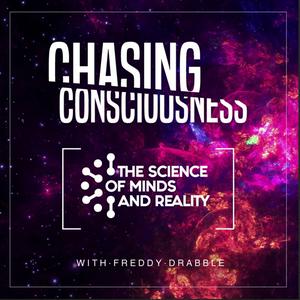
Om Chasing Consciousness
The curious person’s guide to all things mind!
Have you ever wondered how it is that your thoughts and feelings relate to the grey matter in your head? How space and time came to be out of nothing? How what life means to us influences our day-to-day struggles with mental health?
In conversation with experts in physics, psychology, neuroscience and philosophy, Chasing Consciousness will take you to the very fringes of reality and share with you the groundbreaking discoveries that are dramatically changing the way we relate to the world, the future, and our own minds.
Podcast-webbplatsLyssna på Chasing Consciousness, AI med Jonas & Benjamin och många andra poddar från världens alla hörn med radio.se-appen
Hämta den kostnadsfria radio.se-appen
- Bokmärk stationer och podcasts
- Strömma via Wi-Fi eller Bluetooth
- Stödjer Carplay & Android Auto
- Många andra appfunktioner
Hämta den kostnadsfria radio.se-appen
- Bokmärk stationer och podcasts
- Strömma via Wi-Fi eller Bluetooth
- Stödjer Carplay & Android Auto
- Många andra appfunktioner

Chasing Consciousness
Skanna koden,
ladda ner appen,
börja lyssna.
ladda ner appen,
börja lyssna.
Chasing Consciousness: Poddsändningar i Familj
 Sverige

