PoddsändningarHistoriaMath! Science! History!

Math! Science! History!

Gabrielle Birchak
Math! Science! History!
Senaste avsnittet

199 avsnitt

  • Math! Science! History!

    FLASHCARDS! What Sci-Fi can Teach Science

    2026-03-13 | 11 min.
    Science fiction does not need to predict the future to matter. It matters because it trains the mind. In this Flashcards Friday episode, Gabrielle Birchak uses four unforgettable Star Trek moments to show how stories can pressure-test ideas, preview consequences, and build shared language that helps real science move faster and more responsibly. From the chaos of "Spock's Brain" to the furry avalanche of "The Trouble with Tribbles," and a hopeful landing in "Darmok," this episode treats science fiction as a practical tool for scientific thinking, not a guilty pleasure.
    Three things you will learn
    1) Stress testing without the damage
    You will learn how science fiction creates extreme scenarios that expose weak points in systems before those weak points show up in real life, using "Spock's Brain" as the ridiculous and memorable example.
    2) Consequences that compound
    You will learn why consequences often begin as "harmless" variables, and how "The Trouble with Tribbles" and "Genesis" demonstrate cascading failures in two different emotional registers.
    3) Why language is scientific infrastructure
    You will learn how shared metaphors and shared reference points help teams coordinate and innovate, and why "Darmok" is one of the best stories ever told about meaning, not just words.
    🔗 Explore more on our website: mathsciencehistory.com
    📚 To buy my book Hypatia: The Sum of Her Life on Amazon, visit https://a.co/d/g3OuP9h
     
    🌍 Let's Connect!
    Bluesky: https://bsky.app/profile/mathsciencehistory.bsky.social
    Instagram: https://www.instagram.com/math.science.history
    Facebook: https://www.facebook.com/mathsciencehistory 
    LinkedIn: https://www.linkedin.com/company/math-science-history/ 
    Threads: https://www.threads.com/@math.science.history 
    Mastodon: https://[email protected]
    YouTube: Math! Science! History! - YouTube
    Pinterest: https://www.pinterest.com/mathsciencehistory 
    🎧 Enjoying the Podcast?
    ☕ Support the Show: Coffee!! PayPal
    Leave a review! It helps more people discover the show!
    Share this episode with friends & fellow history buffs!
    Subscribe on your favorite podcast platform
    Check out our merch: https://www.mathsciencehistory.com/the-store
    Music: All music is public domain and has no Copyright and no rights reserved.
    Selections from The Little Prince by Lloyd Rodgers
    Until next time, carpe diem!
  • Math! Science! History!

    Mari Wolf: A Hidden Space Age Story

    2026-03-10 | 33 min.
    In this episode, I tell the story of Mari Wolf, who wrote sharp, unsettling science fiction in the early 1950s while also working in Computing at Jet Propulsion Laboratory. Her life sits at the intersection of math, imagination, and a Los Angeles culture that treated the future as something you could sketch, test, and argue about late into the night.
    We follow her through the worlds that shaped her: the lab, the clubs, and the Mojave. We trace her connection to the Pacific Rocket Society, the fan community of the Los Angeles Science Fantasy Society, and the stories she published under her pen name, including the ones you can still read today.
    This episode also pushes back on a familiar historical habit: when a woman builds a body of creative work, institutions too often describe it as a "hobby." Mari Wolf was not a hobbyist. She was an author, and her work deserves to be treated like the serious, ambitious craft that it was.
    Three things you will learn
    When imagination becomes engineering - You will hear how mid-century Southern California created a rare ecosystem where rockets, labs, and speculative writing fed each other.
    A writer's life hidden in plain sight - You will learn how fandom, magazines, and local clubs preserved details that formal histories often skip.
    Where to read her work today - You will get a practical reading list, including where to find her public-domain stories and the fanzine appearance of "Prejudice."
    Links to resources
    ·         JPL Archives feature on Mari Graham and her science fiction writing.
    ·         Free public-domain Mari Wolf stories (Project Gutenberg author page).
    ·         "Prejudice" in Destiny IX (Winter 1953–54) table of contents and scan access.
    ·         The Encyclopedia of Science Fiction entry on Mari Wolf.
    🔗 Explore more on our website: mathsciencehistory.com
    📚 To buy my book Hypatia: The Sum of Her Life on Amazon, visit https://a.co/d/g3OuP9h
    🌍 Let's Connect!
    Bluesky: https://bsky.app/profile/mathsciencehistory.bsky.social
    Instagram: https://www.instagram.com/math.science.history
    Facebook: https://www.facebook.com/mathsciencehistory 
    LinkedIn: https://www.linkedin.com/company/math-science-history/ 
    Threads: https://www.threads.com/@math.science.history 
    Mastodon: https://[email protected]
    YouTube: Math! Science! History! - YouTube
    Pinterest: https://www.pinterest.com/mathsciencehistory 
    🎧 Enjoying the Podcast?
    ☕ Support the Show: Coffee!! PayPal
    Leave a review! It helps more people discover the show!
    Share this episode with friends & fellow history buffs!
    Subscribe on your favorite podcast platform
    Check out our merch: https://www.mathsciencehistory.com/the-store
    Music: All music is public domain and has no Copyright and no rights reserved.
    Selections from The Little Prince by Lloyd Rodgers
    Forever and a Day by Playlistons from Pixabay
    Leave it to Me by Brian Welbourne
    Raw Vintage Rockabilly by Johnny Hoeve
    Traveling and Discovering by Musinova from Pixabay
    Marching to Mars SFX by Twisted Sound from Pixabay

    Until next time, carpe diem!
  • Math! Science! History!

    FLASHCARDS! The Archive that Survives

    2026-03-06 | 12 min.
    How does knowledge survive when libraries burn, devices are seized, and archives come under threat? In this Flashcards Friday episode of Math! Science! History!, Gabrielle Birchak takes a closer look at what it actually means to preserve knowledge in the present moment.
    Using three short flashcards, this episode explores redundancy, cloud storage, and practical threat modeling for scholars, journalists, and anyone responsible for research or records. From ancient libraries to modern reporting, this episode shows why preservation is not passive. It is an active, deliberate practice.
    What You'll Learn
    Redundancy Beats Regret – Why preservation works best as a system, not a single location, and how multiple copies in multiple places reduce the risk of total loss.
    The Cloud Is Helpful, Not Magical – How cloud storage improves access while still requiring planning for outages, lockouts, and long-term durability.
    Threat Modeling for Ordinary Work – How scholars and journalists can think realistically about loss, seizure, and disruption, and reduce risk without turning research into secrecy.
    Resources & Further Reading
    Freedom of the Press Foundation – Digital Security & Source Protection https://freedom.press/
    SecureDrop (for confidential submissions and journalism workflows) https://securedrop.org/
    Reporters Committee for Freedom of the Press https://www.rcfp.org/
    Explore more on our website: mathsciencehistory.com
    To buy my book Hypatia: The Sum of Her Life on Amazon, visit https://a.co/d/g3OuP9h
    🌍 Let's Connect!
    Bluesky: https://bsky.app/profile/mathsciencehistory.bsky.social
    Instagram: https://www.instagram.com/math.science.history
    Facebook: https://www.facebook.com/mathsciencehistory 
    LinkedIn: https://www.linkedin.com/company/math-science-history/ 
    Threads: https://www.threads.com/@math.science.history 
    Mastodon: https://[email protected]
    YouTube: Math! Science! History! - YouTube
    Pinterest: https://www.pinterest.com/mathsciencehistory 
    ☕ Support the Show: Coffee!! PayPal
    Leave a review! It helps more people discover the show!
    Share this episode with friends & fellow history buffs!
    Subscribe on your favorite podcast platform
    Check out our merch: https://www.mathsciencehistory.com/the-store
    Music: All music is public domain and has no Copyright and no rights reserved.
    Selections from The Little Prince by Lloyd Rodgers
    Until next time, carpe diem!
  • Math! Science! History!

    When Knowledge Survives War: Adolphe Rome and Scientific Memory

    2026-03-03 | 18 min.
    What does it take to preserve knowledge when libraries burn, records disappear, and history itself is under threat? In this episode of Math! Science! History!, Gabrielle Birchak takes a closer look at the life and work of Adolphe Rome, a meticulous Belgian historian of science whose devotion to ancient mathematics and astronomy reshaped how we understand figures like Ptolemy, Hypatia, and Theon of Alexandria.
    Spanning from the destruction of the Library of Alexandria to modern data-rescue movements, this episode traces the fragile chain of scientific preservation. It is a story about persistence, philology, and the individuals who quietly ensure that knowledge survives political upheaval, war, and time itself.
    What You Will Learn in This Episode
    When Knowledge Is at Risk – Understand how moments of political instability, from ancient Alexandria to the modern United States, have repeatedly threatened scientific records, and how archivists, historians, and scholars have responded.
    How Ancient Mathematics Is Reconstructed – Discover how Adolphe Rome used linguistic analysis, statistical word usage, and dialect comparison to study ancient mathematical texts like Ptolemy's Almagest, even when original sources no longer existed.
    Why One Historian Still Matters - Learn how Rome's work survived censorship, war, and the destruction of his own research, and how his methods influenced later historians such as Wilbur Knorr and continue to shape the history of science today.
    ☕ Support the Show: Coffee!! PayPal
    🔗 Resources & Further Reading
    Ptolemy, Almagest (overview): https://plato.stanford.edu/entries/ptolemy
    Hypatia of Alexandria (historical context): https://a.co/d/g3OuP9h
    Wilbur Knorr, Textual Studies in Ancient and Medieval Geometry: https://press.princeton.edu/books/paperback/9780691025979/textual-studies-in-ancient-and-medieval-geometry
    History of Science Society and Osiris journal: https://hssonline.org/publications/osiris
    🔗 Explore more on our website: mathsciencehistory.com
    📚 To buy my book Hypatia: The Sum of Her Life on Amazon, visit https://a.co/d/g3OuP9h
     🌍 Let's Connect!
    Bluesky: https://bsky.app/profile/mathsciencehistory.bsky.social
    Instagram: https://www.instagram.com/math.science.history
    Facebook: https://www.facebook.com/mathsciencehistory 
    LinkedIn: https://www.linkedin.com/company/math-science-history/ 
    Threads: https://www.threads.com/@math.science.history 
    Mastodon: https://[email protected]
    YouTube: Math! Science! History! - YouTube
    Pinterest: https://www.pinterest.com/mathsciencehistory 
    Leave a review! It helps more people discover the show!
    Share this episode with friends & fellow history buffs!
    Subscribe on your favorite podcast platform
    Check out our merch: https://www.mathsciencehistory.com/the-store
    Music: All music is public domain and has no Copyright and no rights reserved.
    Selections from The Little Prince by Lloyd Rodgers
    Jingle Synth 80s by Fabien Roch from Pixabay
    Cinematic Ambient Feeling by music_for_video from Pixabay
    Army Marching Steps by Alexander Jauk from Pixabay
    Apathias (Dark Ambient) by Vlad Bakutov from Pixabay
    Dark Hero by u_5gcdffq7mb from Pixabay
    From Page to Practice by Bryan Teoh – Free PD music

    Until next time, carpe diem!

  • Math! Science! History!

    FLASHCARDS! Research that Sits in the Margins

    2026-02-27 | 10 min.
    A clean success story is rarely the whole story. In this Flashcard Friday episode of Math! Science! History!, Gabrielle Birchak offers a simple method for spotting the people who made breakthroughs possible but did not become the headline.
    In the Margins episode gives you three practical questions you can use on any science story to find hidden contributors in author lists, acknowledgments, lab records, and patent filings. Save this episode and use it as your listening companion heading into Women's History Month.
    What you'll learn (because the footnotes have feelings)
    1.      How to spot hidden contributors quickly by asking who touched the evidence, who did the work, and who kept the record.
    2.      Where credit actually shows up in science writing, including author order, acknowledgments, methods sections, and contributor role statements.
    3.      How the "simple story" gets rewarded and how that reward system can hide women's contributions.
    Explore more on our website: mathsciencehistory.com
    📚 To buy my book Hypatia: The Sum of Her Life on Amazon, visit https://a.co/d/g3OuP9h
    🌍 Let's Connect!
    Bluesky: https://bsky.app/profile/mathsciencehistory.bsky.social
    Instagram: https://www.instagram.com/math.science.history
    Facebook: https://www.facebook.com/mathsciencehistory 
    LinkedIn: https://www.linkedin.com/company/math-science-history/ 
    Threads: https://www.threads.com/@math.science.history 
    Mastodon: https://[email protected]
    YouTube: Math! Science! History! - YouTube
    Pinterest: https://www.pinterest.com/mathsciencehistory 
    Explore more on our website: mathsciencehistory.com
    ☕ Support the Show: Coffee!! PayPal
    Leave a review! It helps more people discover the show!
    Share this episode with friends & fellow history buffs!
    Subscribe on your favorite podcast platform
    Check out our merch: https://www.mathsciencehistory.com/the-store
    Music: All music is public domain and has no Copyright and no rights reserved.
    On Matters of Consequence from The Little Prince by Lloyd Rodgers
    Until next time, carpe diem!
Fler podcasts i Historia

Om Math! Science! History!

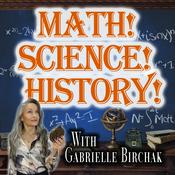
Why do some scientific breakthroughs look different up close than they do in our textbooks? How did math quietly shape the modern world? Math! Science! History! explores the human side of discovery, including the rivalries, the failed attempts, the bold ideas, and the marginalized voices behind the equations and experiments that changed science, technology, and everyday life. Hosted by Gabrielle Birchak, who holds degrees in mathematics and journalism, the show connects codebreaking, astronomy, probability, physics, and innovation to the world we live in today. If you enjoy science stories, historical investigations, and clear math grounded in context, clarity, and research, this show is for you. New episodes twice weekly. Visit www.MathScienceHistory.com for more information.
Podcast-webbplats

Lyssna på Math! Science! History!, Krigshistoriepodden och många andra poddar från världens alla hörn med radio.se-appen

Hämta den kostnadsfria radio.se-appen

  • Bokmärk stationer och podcasts
  • Strömma via Wi-Fi eller Bluetooth
  • Stödjer Carplay & Android Auto
  • Många andra appfunktioner

Math! Science! History!: Poddsändningar i Familj

Sociala nätverk
v8.7.2 | © 2007-2026 radio.de GmbH
Generated: 3/14/2026 - 10:05:15 AM