
Lyssna på den här podden kostnadsfritt i appen: Ladda ner gratis i App Store
radio.se
Sleeptimer
Spara kanal
Reflective Parenting Podcast by Curious Neuron
Cindy Hovington, Ph.D.
Senaste avsnittet
274 avsnitt
You've tried everything but bedtime is still hard: Try Tiny Experiments!
2026-10-27 | 22 min.Send us Fan Mail
Have you tried everything to make bedtime easier, yet it still ends in frustration? Or do you find yourself snapping at your child and wondering why the same patterns keep repeating?
In this episode, I explore ideas from Tiny Experiments by Anne-Laure Le Cunff and how we can apply them to parenting. Instead of searching for one perfect solution, I share how collecting simple “field notes” can help us understand the many factors influencing our child's behaviour, including our own stress, energy, and connection at home.
In this episode, I explore:
Why parenting struggles rarely have one quick fix.
How our stress and emotional capacity influence our reactions.
How to collect field notes to recognize patterns.
How tiny experiments can help us try small changes without expecting perfection.
A reflection to try: Choose one recurring parenting struggle and observe what happens before, during, and after it. What patterns do you notice? What is one small thing you could experiment with?
Support the show
Join the Reflective Parent Book Club for only $9.99 for the year: https://reflectiveparentclub.circle.so/checkout/reflective-parenting-book-club
Watch my Tedx Talk on YouTube called The Over-Educated, Emotionally Underprepared Parent: https://www.youtube.com/watch?v=nDYJFY_9K9E&t=19s
Grab my course for $99, The Emotionally Aware Parent: https://curiousneuron.com/reflective-parent-club/How children learn to regulate emotions (and behaviours)
2026-10-20 | 29 min.Send us Fan Mail
Hi Reflective Parents,
In today's episode, we chat about The Tripartite Model of Parental Socialization! Yes, that's nerd talk for "How do kids learn to regulate/cope with emotions?"
This is important for all of us to learn because has a significant impact on our children's behaviour, our stress, their success in school and in building friendships and even their future well-being.
Learn how to create the best home environment that lowers your stress, teaches your child how to cope with emotions and supports healthier behaviour from all members of your family!
Don't miss my 8-week program starting October 27th! We meet every Tuesday at 12pm ET or 8pm ET (join with your partner at no extra cost!)
https://curiousneuron.com/reflective-parent-club/
Past episodes you might enjoy:
Supporting a child's emotional development through play with Tina Payne Bryson
Understanding a child's emotional development with Amanda Sheffield Moris
Blog post on curiousneuron.com
Support the show
Join the Reflective Parent Book Club for only $9.99 for the year: https://reflectiveparentclub.circle.so/checkout/reflective-parenting-book-club
Watch my Tedx Talk on YouTube called The Over-Educated, Emotionally Underprepared Parent: https://www.youtube.com/watch?v=nDYJFY_9K9E&t=19s
Grab my course for $99, The Emotionally Aware Parent: https://curiousneuron.com/reflective-parent-club/Am I doing too much for my child (and is it impacting their confidence)?
2026-10-13 | 25 min.Send us Fan Mail
As parents, we often step in to help our children because we love them and want to make life easier for them. However, when we constantly solve their problems, prevent frustration, or take over tasks they could learn to manage, we may unintentionally limit their opportunities to develop emotional regulation, resilience, problem-solving skills, and confidence.
In this episode, I explore the research on over-parenting, Jessica Lahey's book The Gift of Failure, and reflect on why allowing children to experience uncomfortable emotions, make mistakes, and face appropriate consequences is an important part of their development.
Three reflections to consider:
Is this truly a problem my child cannot handle, or a problem they are learning how to handle?
What is happening inside me that makes me want to step in right now?
What is the smallest amount of support I can offer my child that still lets them do the next part?
The goal isn't to let our children fail at everything. It's to create opportunities for them to struggle, learn, recover, and discover that they are capable of handling life's challenges.
**Join our book below to discuss this week's topics in school-aged children and get some tips!
Sources:
The Gift of Failure by Jessica Lahey
Podcast episode with Jessica Lahey
Science Article: Childhood self-regulation as a mechanism through which early overcontrolling parenting is associated with adjustment in preadolescence
Curious Neuron blogpost: Doing too much for our kids is having a negative impact on their development
Support the show
Join the Reflective Parent Book Club for only $9.99 for the year: https://reflectiveparentclub.circle.so/checkout/reflective-parenting-book-club
Watch my Tedx Talk on YouTube called The Over-Educated, Emotionally Underprepared Parent: https://www.youtube.com/watch?v=nDYJFY_9K9E&t=19s
Grab my course for $99, The Emotionally Aware Parent: https://curiousneuron.com/reflective-parent-club/How understanding our nervous systems changes the way we parent | Laura Petix
2026-10-06 | 56 min.Send us Fan Mail
I'm joined by occupational therapist and author Laura Petix to celebrate the launch of her new book, The Sensory Code. Laura shares the moment she took her own daughter to the ER because of daily meltdowns, and how that experience shaped her work with parents.
In this episode, we talk about:
The difference between a tantrum and a meltdown, and why length and recovery time matter
Why gentle parenting still matters even when it doesn't stop the meltdown
The eight sensory systems, including interoception, and why hunger or worry can trigger a "zero to 100" reaction
Laura's "zoom in, zoom out" tool for finding the patterns behind a behavior
How to talk to your child about an ADHD diagnosis without making it feel like something is wrong
Why a diagnosis explains behavior but doesn't excuse it
How to help siblings feel seen, and my wish list for schools
Why we need accommodations too, as parents
Resources:
Get The Sensory Code: [Canada link] | [US link]
Join our book club, where we'll be discussing Laura's book all week: [link]
Support the show
Join the Reflective Parent Book Club for only $9.99 for the year: https://reflectiveparentclub.circle.so/checkout/reflective-parenting-book-club
Watch my Tedx Talk on YouTube called The Over-Educated, Emotionally Underprepared Parent: https://www.youtube.com/watch?v=nDYJFY_9K9E&t=19s
Grab my course for $99, The Emotionally Aware Parent: https://curiousneuron.com/reflective-parent-club/How do we teach kids to think critically in a world full of misinformation?
2026-09-29 | 31 min.Send us Fan Mail
As parents, many of us want our children to do well in school, but what if one of the most important skills they need is not memorizing information, but learning how to question it?
In this episode, you and I reflect on what it means to raise critical thinkers in a world filled with headlines, social media experts, AI-generated information, and endless opinions. Together, we explore how curiosity, thoughtful questions, and open conversations at home can help our children learn not just what to think, but how to think.
Drawing from Julie Bogart’s book Raising Critical Thinkers (the book I will discuss inside the book club this week) and the research of Dr. Mary Helen Immordino-Yang, in today's podcast episode, we will reflect on:
• Why curiosity may be one of the most important skills we can protect in our children
• How emotions, beliefs, and experiences shape the way we understand information
• Simple questions parents can ask to help children think more deeply
• How family conversations and respectful debates strengthen reasoning skills
• Why education is not only about learning facts, but about helping children become thoughtful, reflective human beings
• How we can model curiosity and critical thinking in our own everyday lives
You do not need to know all the answers to help your child become a critical thinker. Sometimes the most powerful thing we can do is pause, get curious together, and ask: Who says this? How do we know? What else could be true?
I hope this episode gives you a moment to reflect, learn, and continue growing alongside your child.
Listen to my conversation with Julie here:
https://podcasts.apple.com/ca/podcast/reflective-parenting-podcast-by-curious-neuron/id1440533170?i=1000561516016
Support the show
Join the Reflective Parent Book Club for only $9.99 for the year: https://reflectiveparentclub.circle.so/checkout/reflective-parenting-book-club
Watch my Tedx Talk on YouTube called The Over-Educated, Emotionally Underprepared Parent: https://www.youtube.com/watch?v=nDYJFY_9K9E&t=19s
Grab my course for $99, The Emotionally Aware Parent: https://curiousneuron.com/reflective-parent-club/
Fler podcasts i Barn och familj










Trendiga poddar i Barn och familj





















Om Reflective Parenting Podcast by Curious Neuron
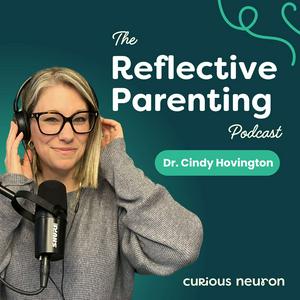
You don’t snap at your kids because you’re a bad parent. You snap because your stress builds faster than your awareness, and no one ever taught you how to handle that.I’m Dr. Cindy Hovington, a mom of three with a doctorate in neuroscience and founder of Curious Neuron. I created The Reflective Parenting Podcast for parents who care deeply, know a lot, and still find themselves overwhelmed in the real moments.This is not a podcast where I tell you how to be a perfect parent. I’m in it with you.Each week, I invite you into my own reflections:what I’m learning from scientific articles and books,what I’m noticing in my nervous system and emotions,and what real parents and experts teach me in conversation.Together, we get curious about why we snap, shut down, or over-function in conflict, and what’s actually happening in our brain and body when we do. We talk about stress, shame, repair, boundaries, playfulness, and the quiet moments no one sees—so you can start to recognize your patterns and gently shift them.By listening, you’ll learn to:notice your stress and body signals earlier,understand the lenses and stories that intensify hard moments,regulate your nervous system when parenting feels like “too much”,and handle conflict with more calm, clarity, and repair.But more than that, you’ll have a companion in the work.I’ll share where I struggle, what I’m practicing, and how I’m trying to grow, so you don’t feel like the only parent who finds this hard.If you’re ready to move away from “perfect” parenting and toward reflective parenting—where every tough moment becomes data, not failure—pull up a chair. Let’s learn, feel, and grow together.Find out which book I will be covering next month:https://curiousneuron.com/podcast/ Join the private group on Facebook:www.facebook.com/groups/reflectiveparentingpodcast/Start training your emotional awareness for FREE:https://tremendous-hustler-7333.kit.com/84371dc0b2Purchase my course The Emotionally Aware Parent.https://curiousneuron.com/reflective-parent-club/Follow us on Instagram @drcindyhovington or Facebook @curiousneuronparenting
Podcast-webbplatsLyssna på Reflective Parenting Podcast by Curious Neuron, Kära Barn 2.0 och många andra poddar från världens alla hörn med radio.se-appen
Hämta den kostnadsfria radio.se-appen
- Bokmärk stationer och podcasts
- Strömma via Wi-Fi eller Bluetooth
- Stödjer Carplay & Android Auto
- Många andra appfunktioner
Hämta den kostnadsfria radio.se-appen
- Bokmärk stationer och podcasts
- Strömma via Wi-Fi eller Bluetooth
- Stödjer Carplay & Android Auto
- Många andra appfunktioner

Reflective Parenting Podcast by Curious Neuron
Skanna koden,
ladda ner appen,
börja lyssna.
ladda ner appen,
börja lyssna.
 Sverige

