
Lyssna på den här podden kostnadsfritt i appen: Ladda ner gratis i App Store
radio.se
Sleeptimer
Spara kanal
219 avsnitt
227 - Why the Saints Built A Temple in Utah I Salt Lake Temple I Church History Matters
2026-10-20 | 1 h 20 min.When the Latter-day Saints left Nauvoo and made their way west to the Salt Lake Valley, they carried with them more than their belongings and their faith. They carried a profound desire to build temples where they could make sacred covenants, receive their endowments, and bind themselves to God and to one another through the ordinances of the restored gospel. In this episode of Church History Matters, Scott Woodward and Casey Griffiths explore how that vision shaped the early years of the Church in Utah and led to one of the most ambitious building projects in Latter-day Saint history: the Salt Lake Temple.The story of the Salt Lake Temple is filled with extraordinary determination, remarkable successes, and daunting challenges. From the arrival of Johnston’s army and the resulting disruptions to the discovery of cracks in the temple’s foundation, the Saints repeatedly faced obstacles that threatened to delay their sacred work. Keeping a capable architect, securing the stone from the quarry, and overcoming the transportation challenges of building in the developing West—including the coming of the railroad—required ingenuity, resources, and years of sacrifice. Through it all, Brigham Young remained committed to creating a place where the Saints could participate in temple ordinances and strengthen their covenant relationship with God.But Brigham Young also knew that the Salt Lake Temple would take many years to complete. With a desire to see a temple dedicated and functioning during his lifetime, he directed attention to the construction of the St. George Utah Temple, which became the first temple completed in Utah and was dedicated in 1877, the year of his death. Its completion allowed the Saints to participate in temple ordinances while work continued on the great temple in Salt Lake City.Join Scott and Casey as they explore the faith, practical ingenuity, sacrifices, and setbacks behind the building of Utah’s early temples. Discover why temple building was about far more than stone walls and towering spires—and how the Saints’ determination to receive sacred ordinances helped shape their communities, their faith, and their enduring commitment to one another through covenants.#ChurchHistoryMatters #LDSHistory #SaltLakeTemple #StGeorgeTemple #BrighamYoung #LatterDaySaints #LDSChurchHistory #TempleCovenants #ChurchHistory #Restoration226 - History of LDS Temple Worship I Salt Lake Temple I Church History Matters
2026-10-13 | 1 h 9 min.What is the story behind the history of Latter-day Saints and temple worship? In this episode of Church History Matters, Scott Woodward and Casey Griffiths trace the remarkable history of Latter-day Saint temples from the earliest days of the Restoration to the iconic temple in Salt Lake City. The story begins in Kirtland, where the first temple of this dispensation was built, and continues to Nauvoo, where Joseph Smith introduced additional temple ordinances and teachings that would shape the future of temple worship.After the Saints arrived in Utah, the story took another important turn with the construction of the St. George Utah Temple, the first temple completed in the West. The experiences there—especially under President Wilford Woodruff—helped establish and refine important details of temple worship and temple work. Woodruff's leadership and efforts in St. George played a significant role in creating a foundation for the temple practices that would continue as the Salt Lake Temple rose from the ground.From Kirtland and Nauvoo to St. George and finally Salt Lake City, Scott and Casey explore the people, revelations, challenges, and turning points that shaped one of the most recognizable temples in the world. Why was the Salt Lake Temple designed the way it was? What did earlier temples teach the Saints? And how did Wilford Woodruff help establish the details of temple worship that would influence generations to come?Join Scott and Casey for a fascinating journey through the history of Latter-day Saint temples and discover how the story of the Salt Lake Temple is really part of a much larger story of Restoration, revelation, and covenant worship.#ChurchHistoryMatters #SaltLakeTemple #LDS #TempleHistory #KirtlandTemple #NauvooTemple #StGeorgeTemple #WilfordWoodruff #LDSHistory #ChurchHistory #restoration Email newsletter: https://scripture-central.kit.com/church-history-matters225 - Is the Joseph Smith Daguerreotype Real? Latest Research I Joseph Smith I Church History Matters EP01
2026-10-06 | 1 h 4 min.Is this really Joseph Smith? A recently discovered daguerreotype has sparked intense debate among historians, researchers, and Latter-day Saints. Could this remarkable photograph actually be an authentic image of Joseph Smith the Prophet?In this episode of Church History Matters, Scott Woodward and Casey Griffiths sit down with independent researcher Patrick A. Bishop and classical and forensic artist Joseph F. Brickey to explore the evidence behind the controversial daguerreotype. Patrick and Joseph share their research, discoveries, and insights—including the story behind their new film, Brother Joseph Again.What can forensic analysis, historical records, photographic technology, and Joseph Smith's known appearance tell us? Is the man in this daguerreotype really Joseph Smith—or is the evidence pointing to someone else? Scott and Casey dig into the arguments, examine the evidence, and ask the central question: Could we actually be looking at a photograph of the Prophet Joseph Smith?Watch this fascinating investigation and decide for yourself.What do you think? Is the daguerreotype really Joseph Smith? Let us know in the comments!#JosephSmith #ChurchHistory #LDS #LatterDaySaints #MormonHistory #JosephSmithDaguerreotype #ChurchHistoryMatters #BrotherJosephAgain #LDSHistory #Restoration224- The Man BEHIND the Legend I Porter Rockwell I Church History Matters
2026-09-29 | 1 h 14 min.Few figures in early Latter-day Saint history have a reputation as colorful—and as misunderstood—as Orrin Porter Rockwell. Known in popular memory as a fearless frontier scout, bodyguard, and legendary defender of Joseph Smith, Porter has often been portrayed as a rough-and-tumble gunman whose reputation sometimes overshadowed the real person. But who was Porter Rockwell when the legends were stripped away?In this episode of Church History Matters, Scott Woodward and Casey Griffiths take a closer look at the man behind the myth. What was Porter Rockwell actually like when people met him? Why did friends and Church leaders describe such loyalty, courage, humor, generosity, and devotion in him? From his lifelong friendship with Joseph Smith to his relationships with ordinary Latter-day Saints, Porter’s story reveals a man whose personality could be as memorable as his reputation. Those who encountered him often remembered his kindness, hospitality, quick wit, unwavering loyalty, and willingness to stand by his friends through extraordinary circumstances.Scott and Casey explore the stories and firsthand impressions that help paint a fuller picture of Porter Rockwell—not simply as the legendary “Mormon Danite” of popular folklore, but as a complex human being whose faith, friendships, personality, and devotion shaped the way others remembered him. Who was Porter Rockwell really? And what can the testimony of those who knew him tell us about the man behind one of the most enduring legends of Latter-day Saint history?#Porterrockwell #Churchhistorymatters #caseygriffiths #scottwoodward223- What Stories are Actually True? I Porter Rockwell I Church History Matters
2026-09-22 | 1 h 8 min.Porter was more than a legendary frontiersman and lawman. He was a close friend of Joseph Smith, a protector of the Prophet, and a man whose life was deeply shaped by the events surrounding Joseph’s death. In June 1844, Porter helped Joseph and Hyrum cross the Mississippi River as they sought to avoid arrest. When Joseph decided to return to Nauvoo and face the authorities, Porter accompanied him part of the way toward Carthage. Joseph ultimately asked him to return to Nauvoo, concerned for his safety. It was the last time Porter saw Joseph alive.Porter's battle cry was, "Wheat! Wheat! Wheat!"The episode also examines one of the most striking and controversial events in Porter’s life: the shooting of Franklin A. Worrell on September 16, 1845, in Hancock County, Illinois. Worrell had been a lieutenant in the Carthage Greys and had previously guarded the jail where Joseph and Hyrum were killed. Porter was serving as a deputy under Sheriff Jacob Backenstos when he shot Worrell during a confrontation involving the sheriff. The circumstances, competing accounts, and questions surrounding the shooting make this a fascinating moment in the aftermath of the martyrdom. We’ll also explore Porter’s famous statement about Joseph: “When they killed Joseph, they killed the only friend I ever had.” What did Joseph mean to Porter? How did the martyrdom shape his life? And what can we learn about the man behind the legend?Join Scott and Casey as they explore the loyalty, courage, controversy, and enduring legacy of Porter Rockwell.Watch, like, and subscribe to Church History Matters for more stories from the history of The Church of Jesus Christ of Latter-day Saints.#PorterRockwell #JosephSmith #ChurchHistoryMatters #LDSHistory #CarthageJail #MormonHistory
Fler podcasts i Kristendom








Trendiga poddar i Kristendom






Om Church History Matters
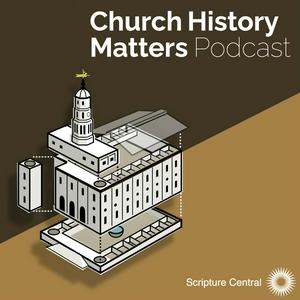
The Church History Matters Podcast features in-depth conversations between Scott and Casey where they dive deep into both the challenges and beauty of Latter-day Saint Church History
Podcast-webbplatsLyssna på Church History Matters, Martinson Möter och många andra poddar från världens alla hörn med radio.se-appen
Hämta den kostnadsfria radio.se-appen
- Bokmärk stationer och podcasts
- Strömma via Wi-Fi eller Bluetooth
- Stödjer Carplay & Android Auto
- Många andra appfunktioner
Hämta den kostnadsfria radio.se-appen
- Bokmärk stationer och podcasts
- Strömma via Wi-Fi eller Bluetooth
- Stödjer Carplay & Android Auto
- Många andra appfunktioner

Church History Matters
Skanna koden,
ladda ner appen,
börja lyssna.
ladda ner appen,
börja lyssna.
Church History Matters: Poddsändningar i Familj
 Sverige